Maximizing PC Gaming Storage: SSD vs. NVMe Performance 2026
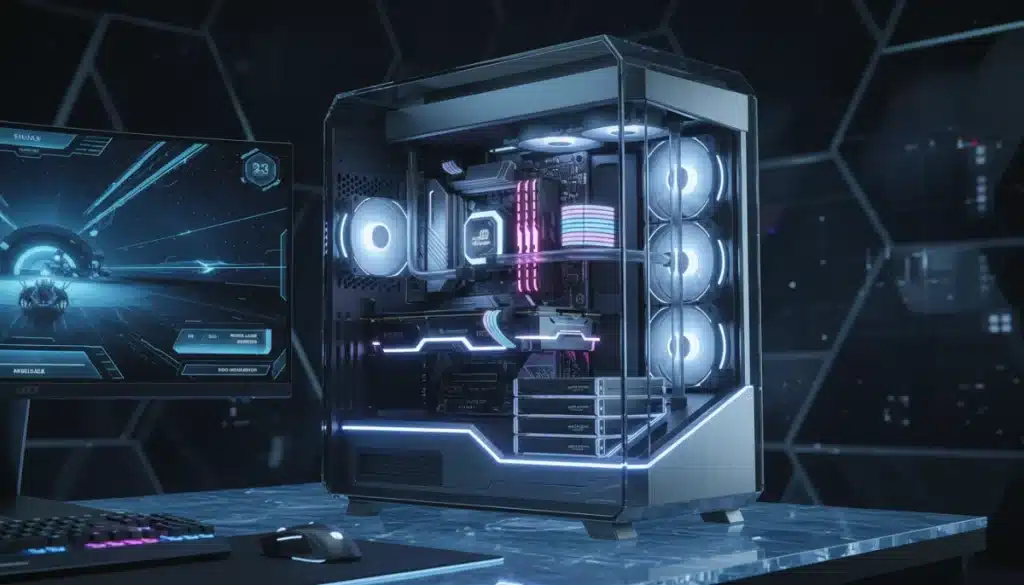
In 2026, the landscape of PC Gaming Storage has reached a fever pitch, where every millisecond counts toward your competitive edge.
As game worlds expand into breathtaking complexity, the choice between traditional solid-state drives and advanced high-speed interfaces has never been more critical.
Modern enthusiasts are ditching the bottlenecks of SATA for the blistering throughput of NVMe technology.
With the latest PCIe 5.0 drives now pushing sequential speeds beyond 14,000 MB/s, these storage solutions have evolved from simple luxury items into essential components for seamless open-world immersion.
This year marks a definitive shift as DirectStorage 2.0 becomes the industry standard, making high-bandwidth hardware mandatory for AAA titles. Understanding how these rapid data-transfer protocols impact your framerate and load times is the key to future-proofing your ultimate gaming rig.
The Evolving Landscape of Gaming Storage in 2026
The demand for faster, more efficient storage solutions in PC gaming continues to accelerate. As game sizes grow and graphics fidelity increases, the underlying storage technology plays a critical role in overall user experience.
Gamers and hardware enthusiasts are constantly evaluating the best options, with Solid State Drives (SSDs) and Non-Volatile Memory Express (NVMe) leading the discussion. Understanding their respective capabilities and limitations is paramount for optimal system configuration.
By 2026, the distinctions between these technologies will be even more pronounced, driven by advancements in game engines, operating systems, and hardware interfaces.
This evolution directly impacts load times, in-game asset streaming, and system responsiveness, making informed choices essential for PC Gaming Storage 2026.
SSD Fundamentals: SATA’s Enduring Role
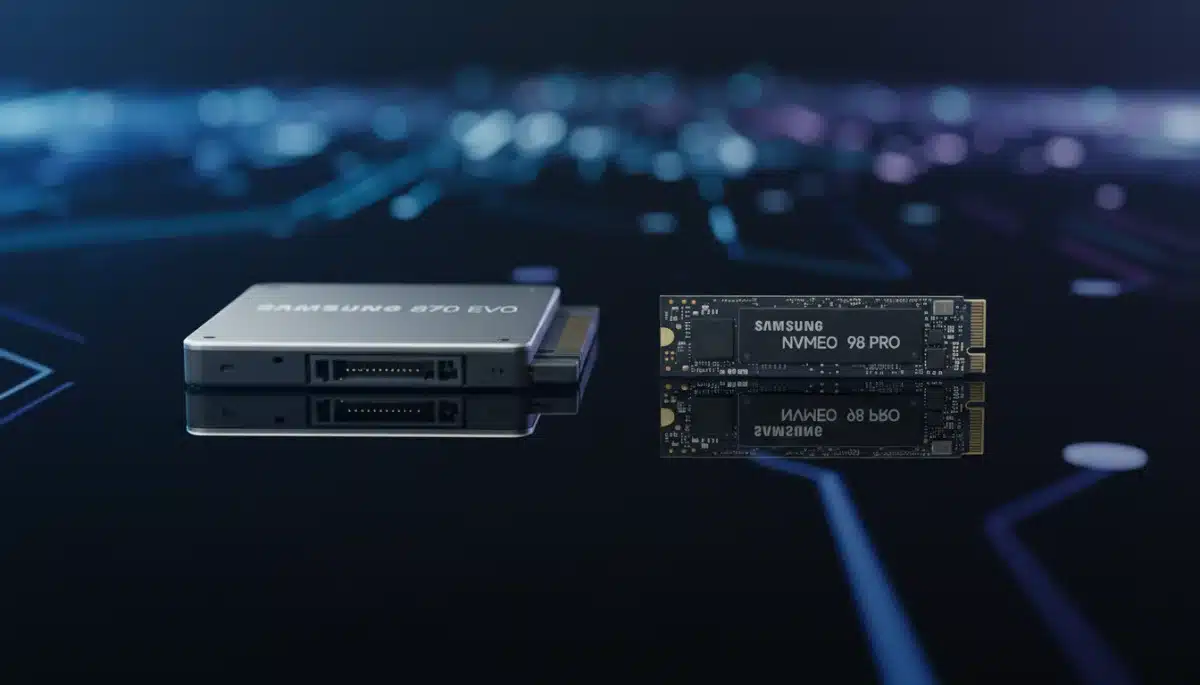
SATA SSDs have been the workhorse of fast storage for years, offering significant performance improvements over traditional Hard Disk Drives (HDDs). They connect via the SATA 3.0 interface, which provides a theoretical maximum bandwidth of 6 Gbps.
While NVMe has emerged as the performance king, SATA SSDs still hold a relevant position due to their affordability and widespread compatibility.
Many older motherboards and systems without M.2 slots still rely on SATA as their primary SSD interface, making them a viable option for budget-conscious builds or secondary storage.
However, the performance ceiling of SATA SSDs, typically around 550 MB/s for sequential reads and writes, is increasingly becoming a bottleneck for modern gaming applications.
This limitation highlights the need for more advanced solutions when considering PC Gaming Storage 2026.
SATA SSDs: Performance and Cost Considerations
SATA SSDs offer a compelling balance of cost and performance, making them accessible to a broad range of gamers. They drastically reduce game load times compared to HDDs, providing a smoother gaming experience.
The installation process for 2.5-inch SATA SSDs is straightforward, fitting into standard drive bays and connecting with familiar SATA data and power cables. This ease of integration contributes to their continued popularity in system upgrades.
- Affordability: Generally lower cost per gigabyte than NVMe.
- Compatibility: Widely supported by almost all modern and many older motherboards.
- Installation Ease: Simple to install in standard drive bays.
- Performance Gain: Substantial speed increase over traditional HDDs.
When SATA SSDs Remain a Smart Choice
Despite NVMe’s dominance, SATA SSDs are not obsolete, especially for specific use cases. They are excellent for storing less demanding games or as a secondary drive for general applications.
For gamers upgrading from an HDD, a SATA SSD represents a significant performance leap without breaking the bank. It breathes new life into older systems that may not support NVMe technology.
In 2026, SATA SSDs will likely continue to serve as a cost-effective solution for expanding storage capacity or for systems where the absolute fastest speeds aren’t the primary concern for PC Gaming Storage 2026.
NVMe Technology: The Speed Revolution
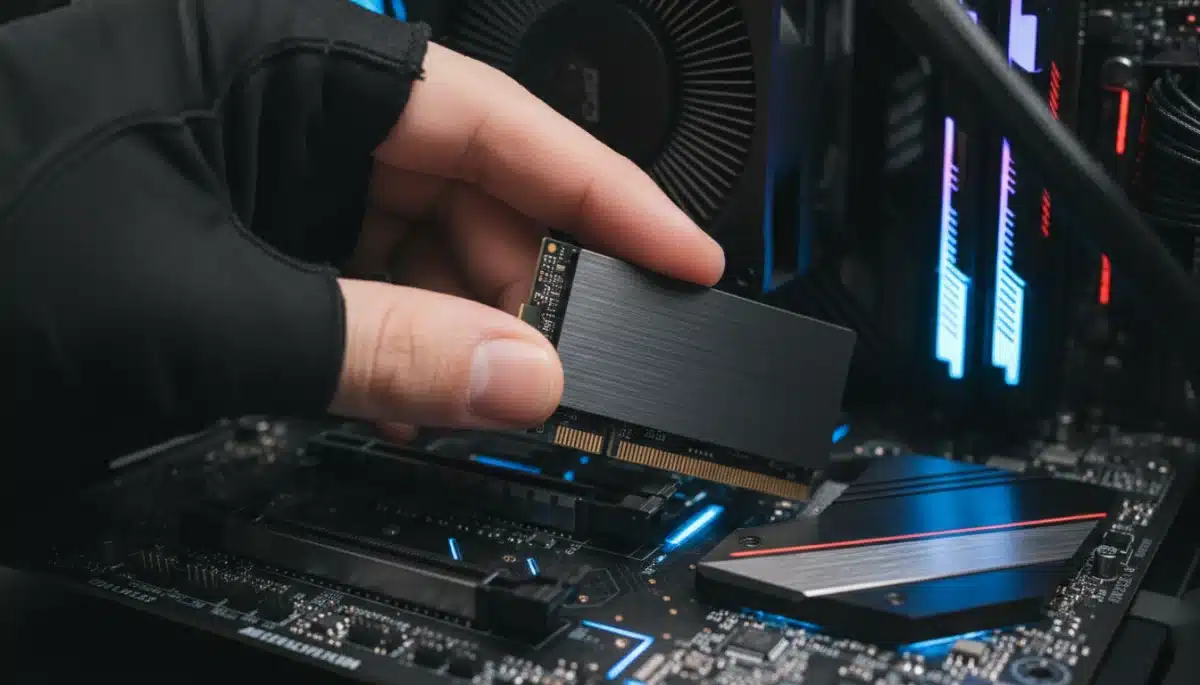
NVMe, or Non-Volatile Memory Express, is a communication interface specifically designed for SSDs to take full advantage of the PCI Express (PCIe) bus. This direct connection to the CPU bypasses the bottlenecks of older interfaces like SATA.
The result is a dramatic increase in bandwidth and a reduction in latency, translating to significantly faster read and write speeds. NVMe drives typically come in the M.2 form factor, which is compact and plugs directly into the motherboard.
These drives are redefining expectations for data transfer speeds, offering multiple times the performance of SATA SSDs. This makes them indispensable for maximizing your PC Gaming Storage 2026 experience.
PCIe Generations and NVMe Performance
NVMe performance is intrinsically linked to the generation of the PCIe interface it utilizes. PCIe Gen 3 offers impressive speeds, but newer PCIe Gen 4 and Gen 5 significantly push the boundaries.
By 2026, PCIe Gen 5 NVMe drives will be more prevalent, offering sequential read speeds upwards of 10,000 MB/s, and even Gen 6 is on the horizon. This exponential growth in speed directly benefits game loading and asset streaming.
Modern gaming titles are increasingly optimized to leverage these higher speeds, reducing texture pop-in and enabling more complex, dynamic environments. This makes selecting the correct PCIe generation crucial for maximizing PC Gaming Storage 2026.
- PCIe Gen 3: Offers speeds up to 3,500 MB/s, a major upgrade from SATA.
- PCIe Gen 4: Doubles Gen 3 speeds, reaching up to 7,000 MB/s, ideal for current high-end gaming.
- PCIe Gen 5: Pushes past 10,000 MB/s, setting new benchmarks for future gaming.
- Lower Latency: Direct CPU connection reduces command overhead, improving responsiveness.
SSD vs. NVMe: Direct Performance Comparison for Gaming
When directly comparing SSD and NVMe for gaming, the difference in raw speed is undeniable. NVMe drives consistently outperform SATA SSDs in benchmarks and real-world gaming scenarios.
Game load times, a critical factor for many players, are significantly shorter on NVMe drives. This is particularly noticeable in titles with large open worlds or numerous assets that need to be loaded quickly.
Beyond initial loading, NVMe also benefits in-game asset streaming, reducing stuttering and improving overall fluidity. This ensures a more immersive experience for PC Gaming Storage 2026.
Impact on Game Load Times and Asset Streaming
The primary advantage of NVMe in gaming is its ability to drastically cut down loading screens. Games that previously took minutes to load can now be ready in seconds on a high-speed NVMe drive.
Modern game engines, such as Unreal Engine 5 with its Nanite and Lumen technologies, are designed to stream high-resolution assets directly from storage.
NVMe’s superior bandwidth ensures these assets are delivered without bottlenecks, preventing visual pop-in and maintaining high frame rates.
This capability becomes increasingly vital as game worlds become more detailed and complex, demanding constant high-speed data access. This makes NVMe a crucial component for optimal PC Gaming Storage 2026.
Future-Proofing Your Gaming Rig with NVMe
Investing in an NVMe drive, especially a PCIe Gen 4 or Gen 5 model, is a strong move towards future-proofing your gaming PC. As game developers continue to optimize for faster storage, older SATA SSDs will likely become a limiting factor.
Console generations like the PlayStation 5 and Xbox Series X | S already leverage NVMe-like storage to achieve their rapid load times and asset streaming capabilities. PC games are following suit, often being developed with these new storage paradigms in mind.
Selecting a high-performance NVMe drive ensures your system can keep pace with upcoming titles and technologies, solidifying its position for PC Gaming Storage 2026 and beyond.
Optimizing Your PC Gaming Storage Configuration
A balanced storage strategy often involves a combination of different drive types to maximize both performance and cost-effectiveness. This approach allows gamers to allocate resources where they are most needed.
For instance, an NVMe drive can serve as the primary boot drive and host for frequently played, demanding titles. Meanwhile, a larger SATA SSD or even an HDD can store less critical games or media files.
Careful planning of your storage configuration ensures you get the best of both worlds: lightning-fast performance for your core gaming experience and ample space for your entire library. This is key for PC Gaming Storage 2026.
Tiered Storage Strategies for Gamers
Implementing a tiered storage strategy means assigning different types of data to different storage devices based on their access speed requirements. This optimizes both performance and budget.
The fastest NVMe drive is best reserved for the operating system, essential applications, and your most-played, graphically intensive games. This ensures minimal loading times and maximum responsiveness.
A secondary SATA SSD can house a larger collection of games that benefit from SSD speeds but don’t require NVMe’s extreme bandwidth. For bulk storage of media or older titles, a high-capacity HDD remains a cost-effective option for PC Gaming Storage 2026.
- Primary NVMe: OS, core applications, demanding current-gen games.
- Secondary SATA SSD: Larger game library, less performance-critical applications.
- HDD (Optional): Bulk storage for media, older games, backups.
- External Storage: Portable game libraries or archival data.
Installation and Compatibility Considerations
Before purchasing new storage, always verify your motherboard’s compatibility. Ensure it has the necessary M.2 slots for NVMe drives and supports the desired PCIe generation (Gen 3, Gen 4, or Gen 5).
Some motherboards may have M.2 slots that share bandwidth with SATA ports, potentially disabling certain SATA ports when an NVMe drive is installed. Consulting your motherboard manual is crucial to avoid configuration issues.
Proper heat dissipation for NVMe drives is also important, especially for high-performance models, as throttling can occur. Many motherboards include M.2 heatsinks, or aftermarket solutions can be considered for PC Gaming Storage 2026.
Understanding Latency and I/O Operations
Beyond raw sequential read/write speeds, latency and Input/Output Operations Per Second (IOPS) are critical metrics, especially for gaming. NVMe significantly reduces latency compared to SATA.
SATA’s AHCI protocol was designed for traditional HDDs, which are mechanical devices with inherent delays. NVMe, however, was built from the ground up for flash memory, allowing for many more I/O commands to be processed simultaneously.
This means that even if two drives have similar theoretical sequential speeds, the NVMe drive will feel much snappier due to its ability to handle multiple small data requests more efficiently.
This directly impacts game responsiveness and overall system fluidity, critical for PC Gaming Storage 2026.
The Role of NVMe in Reducing Game Stutter
Game stutter often occurs when the system cannot load assets quickly enough, causing momentary freezes or frame rate drops. This is particularly prevalent in open-world games or titles with dynamic loading.
NVMe’s low latency and high IOPS capabilities are instrumental in mitigating these issues. It allows the game engine to access numerous small files and textures almost instantaneously, ensuring a continuous flow of data to the GPU and CPU.
As games become more demanding, the ability of NVMe to handle complex I/O patterns will be increasingly vital, providing a smoother and more consistent gaming experience. This is a core benefit of PC Gaming Storage 2026.
The Impact of DirectStorage and Future APIs
Microsoft’s DirectStorage API is a game-changer for PC gaming storage, designed to fully leverage the capabilities of NVMe SSDs. It allows games to transfer data directly from the GPU, bypassing the CPU to reduce overhead.
This technology, initially developed for the Xbox Series X|S consoles, is now making its way to PC, promising even faster load times and more efficient asset streaming. It fundamentally redefines how games interact with storage.
For gamers, this means that the performance gap between NVMe and SATA will widen even further, making NVMe an almost mandatory upgrade for truly next-gen gaming experiences. DirectStorage is a key component for PC Gaming Storage 2026.
DirectStorage and its Requirements
DirectStorage requires an NVMe SSD and a compatible graphics card (DX12 Ultimate or newer). While it will technically work with SATA SSDs, the performance benefits will be severely limited due to the SATA interface bottleneck.
The API is designed to reduce CPU utilization for I/O operations, freeing up CPU cycles for other tasks and potentially leading to higher frame rates. This efficiency gain is a significant advantage for gaming performance.
As more games adopt DirectStorage, gamers without NVMe drives will find themselves at a disadvantage in terms of loading speed and potentially in-game performance. This underscores the importance of NVMe for PC Gaming Storage 2026.
Market Trends and Pricing in 2026
The storage market is dynamic, with pricing and availability constantly fluctuating. By 2026, NVMe drives are expected to become even more affordable, making them accessible to a wider audience of gamers.
While high-end PCIe Gen 5 NVMe drives will likely remain a premium option, PCIe Gen 4 drives are anticipated to hit a sweet spot in terms of price-to-performance ratio. SATA SSDs will likely see further price drops, solidifying their position as entry-level upgrades.
Monitoring market trends will be crucial for making informed purchasing decisions and getting the best value for your investment in PC Gaming Storage 2026.
Forecasting NVMe and SSD Price Evolution
Historical trends indicate a continuous decline in the cost per gigabyte for flash storage. This trajectory is expected to continue, albeit with occasional fluctuations due to supply chain dynamics and demand spikes.
The increasing competition among manufacturers and advancements in NAND flash technology contribute to this downward pressure on prices. This benefits consumers looking to upgrade their storage without excessive costs.
By 2026, it is reasonable to expect that high-capacity NVMe drives will be more attainable for the average gamer, further driving the adoption of this superior technology for PC Gaming Storage 2026.
Key Takeaways for Maximizing Your PC Gaming Storage
Ultimately, the choice between SSD and NVMe, or a combination of both, depends on individual needs, budget, and system compatibility. However, the trend clearly points towards NVMe as the future of gaming storage.
For the best possible gaming experience in 2026, an NVMe drive should be prioritized for your operating system and primary game library. This ensures the fastest load times and optimal asset streaming.
SATA SSDs still offer excellent value for secondary storage or systems with limited NVMe support, but they will increasingly be outclassed by NVMe in performance-critical scenarios. This is the core message for PC Gaming Storage 2026.
| Key Storage Aspect | Impact on PC Gaming in 2026 |
|---|---|
| NVMe Speed | Significantly faster game load times and smoother asset streaming, crucial for modern titles. |
| SATA SSD Value | Cost-effective for secondary storage and general game libraries, still a major upgrade from HDDs. |
| DirectStorage API | Leverages NVMe to reduce CPU overhead and accelerate data transfer, enhancing future game performance. |
| Tiered Storage | Optimal strategy using NVMe for primary and SATA for secondary storage, balancing performance and cost. |
Frequently Asked Questions About Gaming Storage
While not strictly mandatory for all games, NVMe is becoming increasingly essential for optimal performance in 2026. Modern titles and APIs like DirectStorage are designed to leverage NVMe’s speed, significantly reducing load times and improving asset streaming. For the best experience, NVMe is highly recommended.
Absolutely. A tiered storage approach, combining an NVMe drive for your OS and main games with a SATA SSD for a larger game library, is highly effective. This strategy balances performance with cost, ensuring you get the best of both worlds for your PC Gaming Storage 2026 needs.
For 2026, PCIe Gen 4 NVMe drives offer an excellent balance of performance and value, providing speeds up to 7,000 MB/s. PCIe Gen 5 is emerging with even higher speeds, but Gen 4 will remain highly capable for most gaming scenarios, especially with the current state of PC Gaming Storage 2026 optimization.
A SATA SSD will not bottleneck your entire PC, but it will be the slowest component in your storage subsystem compared to NVMe. Load times and asset streaming in demanding games will be slower than on an NVMe drive, especially as DirectStorage becomes more prevalent in PC Gaming Storage 2026 titles.
Game sizes continue to grow, with many AAA titles exceeding 100 GB. For 2026, a minimum of 1TB is recommended for your primary gaming drive, with 2TB or more being ideal to accommodate a growing library. Consider additional storage for media and other applications to ensure ample PC Gaming Storage 2026.
Looking Ahead: The Future of Gaming Storage
The evolution of storage technology is a continuous journey, with NVMe leading the charge towards unparalleled gaming experiences. As game developers push boundaries, efficient data access becomes paramount.
Gamers should prioritize NVMe for their primary gaming needs while leveraging SATA SSDs for supplementary storage. This strategy ensures both high performance and ample capacity.
Monitoring advancements in PCIe generations and the widespread adoption of APIs like DirectStorage will be key to staying ahead in PC Gaming Storage 2026, ensuring your setup remains competitive and immersive.
