Talent Exodus or Evolution? Key Creative Movements in US Production

Are traditional production houses losing their grip on top-tier creatives, or are we witnessing a structural rebirth of Hollywood storytelling? The ongoing wave of industry shifts has sparked a fierce debate over whether this movement represents a Talent Exodus or Evolution across major American studios.
With the rapid rise of the independent creator economy and localized global filming hubs, elite directors, showrunners, and producers are no longer bound by legacy studio contracts.
They are migrating toward platforms that offer greater intellectual property ownership, artistic freedom, and modern workflows.
As compensation models and studio boundaries shift this year, tracking where the industry’s brightest minds settle is essential for predicting the future of entertainment.
This breakdown analyzes the strategic migrations reshaping the entertainment ecosystem and what they mean for the future of greenlights.
Understanding the Current Creative Landscape
The US production industry is in a constant state of flux, but early 2026 has seen an accelerated pace of change in creative personnel.
This section will outline the observable patterns and initial impacts across the major studios and independent production houses, providing a foundational understanding of the environment.
Reports from leading entertainment publications and internal studio memos indicate a higher-than-usual volume of executive and creative talent transitioning between companies.
This movement is not isolated but appears to be a systemic shift, suggesting deeper underlying causes than typical industry churn. It raises the question: is this a Talent Exodus or Evolution.
Understanding the nuances of these changes is critical for anyone invested in the future of film and television. The creative landscape is being redrawn, impacting everything from development slates to the very identity of production entities. We examine the first signs of these reshaped dynamics.
Shifting Studio Allegiances
Several high-profile showrunners and directors, previously synonymous with specific studios, have announced new multi-year deals with competing entities or newly formed independent ventures. These moves often involve significant financial incentives and promises of greater creative control, highlighting a competitive environment.
The decision-making process for these creatives is complex, often balancing legacy relationships with fresh opportunities. The allure of building new franchises or revitalizing existing intellectual property in a different environment plays a significant role in these transitions, as reported by industry insiders.
- Prominent directors signing exclusive deals with rival streamers.
- Showrunners moving from network television to cable or SVOD platforms.
- Writers’ room leaders establishing new independent production companies.
Impact on Production Pipelines
The immediate effect of these movements is visible in the announced production slates for late 2026 and beyond. Some anticipated projects have been delayed or re-assigned as key personnel depart, while new projects emerge under the banners of their new creative homes.
This fluidity creates both challenges and opportunities. Studios losing talent must quickly adapt, either by promoting from within or aggressively recruiting new blood, while those gaining talent can accelerate their strategic growth initiatives. The question of Talent Exodus or Evolution is directly tied to these pipeline adjustments.
The long-term implications for production pipelines could be substantial, potentially leading to a diversification of creative voices and storytelling approaches across the industry. This dynamic environment encourages innovation but also poses risks for established production models.
Drivers Behind Creative Talent Mobility
The motivations behind the increased mobility of creative talent are multifaceted, extending beyond simple financial considerations. A deeper dive into these drivers reveals a complex interplay of personal ambition, changing industry structures, and the pursuit of creative fulfillment.
The rise of streaming platforms, coupled with evolving audience consumption habits, has fundamentally altered the power dynamics within the industry.
Creatives now have a broader array of potential partners and distribution channels, empowering them to seek environments that best align with their vision. This shift is a key factor in whether we are witnessing a Talent Exodus or Evolution.
Understanding these drivers is essential for studios and production houses aiming to retain their top talent and attract new stars.
It’s no longer just about the biggest paycheck; it’s about the entire ecosystem offered to a creative professional. We explore the core elements influencing these critical career decisions.
The Lure of Creative Freedom
Many creatives cite the desire for increased creative autonomy and a less restrictive development process as primary motivators for moving. Traditional studio systems, with their layers of executive oversight, can sometimes stifle innovative ideas or prolong production timelines.
Newer platforms and independent studios often offer a more agile and creator-friendly environment, allowing for quicker green-lights and fewer creative compromises.
This appeal is a powerful magnet for talent seeking to realize their artistic visions without undue interference, prompting the discussion of Talent Exodus or Evolution.
The ability to experiment with unconventional narratives, explore niche genres, or develop passion projects is a significant draw, often outweighing the perceived stability of a long-term studio contract. This pursuit of artistic integrity is a recurring theme in conversations with departing creatives.
Evolving Compensation Models
The shift towards streaming platforms has also brought about changes in compensation structures, particularly regarding backend deals and intellectual property ownership. Traditional residuals models are being re-evaluated, with new frameworks emerging that can be more appealing to top talent.
Guaranteed upfront payments, significant overall deals, and more favorable terms for IP ownership are becoming standard in competitive bidding wars for established creatives. These new models reflect an industry adapting to a digital-first distribution landscape, influencing the Talent Exodus or Evolution narrative.
Furthermore, the opportunity to develop multiple projects under a single umbrella deal, often with creative input across various productions, adds another layer of financial and professional appeal. This comprehensive approach to talent acquisition is reshaping contractual norms.
The Role of Streaming Giants and Independent Studios
Streaming services have undeniably revolutionized content consumption, and their impact on creative talent movement is profound. These platforms, with their massive budgets and global reach, have become formidable competitors to traditional Hollywood studios for top-tier creatives.
Independent production houses, often backed by private equity or smaller distribution deals, also offer a nimble alternative.
Their ability to foster unique voices and take greater creative risks positions them as attractive destinations for talent disillusioned with corporate structures, fueling the debate of Talent Exodus or Evolution.
The combined influence of streaming giants and a robust independent sector has created a seller’s market for creative talent. This dynamic forces established studios to re-evaluate their strategies for talent retention and acquisition, as the competition intensifies on multiple fronts.
Streaming’s Aggressive Talent Acquisition
Streaming platforms like Netflix, Amazon, and Apple have been particularly aggressive in securing exclusive deals with high-profile directors, writers, and producers. These deals often involve multi-million dollar commitments and the promise of extensive resources for content development.
The appeal of a direct-to-consumer model, with its global audience and data-driven insights, also offers creatives unique opportunities to connect with viewers.
This direct access can be a powerful incentive, bypassing traditional theatrical or broadcast distribution models and influencing the Talent Exodus or Evolution.
The sheer volume of content required by streaming services also means more opportunities for creatives to get projects greenlit and produced, reducing the typical development hell often associated with traditional studios. This high-volume environment is a significant draw.
Independent Production’s Niche Appeal
While streaming giants offer scale, independent production houses provide a different kind of allure: intimacy, bespoke creative environments, and a focus on artistic integrity over blockbuster potential. For many creatives, this can be a more fulfilling path.
Independent studios often allow for a more hands-on approach to production, with creators deeply involved in every stage from conception to post-production. This level of engagement is highly valued by those who prioritize artistic control above all else, making it a key factor in the Talent Exodus or Evolution discussion.
The success of recent independent films and series, garnering critical acclaim and awards, demonstrates that high-quality content can thrive outside the traditional studio system. This validates the choices of creatives opting for independent pathways.
Traditional Studios’ Response and Adaptation
Facing unprecedented competition, traditional US production houses are not standing idly by. They are actively implementing strategies to counter the outflow of talent and adapt to the new industry landscape, indicating a proactive stance rather than passive acceptance.
These studios are leveraging their deep institutional knowledge, vast intellectual property libraries, and established global distribution networks as key differentiators. Their response is a critical component in determining if the current trend is a Talent Exodus or Evolution.
The adaptation strategies include a mix of internal restructuring, revised talent agreements, and strategic partnerships, all aimed at fostering an environment where top creatives feel valued, supported, and creatively challenged. This period marks a significant pivot for many legacy entertainment companies.
Revisiting Talent Deals and Incentives
Many major studios are re-evaluating their standard talent contracts, offering more competitive financial packages and increased creative input. This includes more generous backend participation, development funds for multiple projects, and clearer pathways to directing or showrunning roles.
There’s a growing recognition that a one-size-fits-all approach to talent management is no longer viable. Studios are developing more personalized agreements tailored to individual creatives’ ambitions and career goals, directly addressing the conditions that foster Talent Exodus or Evolution.
Furthermore, studios are investing in nurturing emerging talent, establishing mentorship programs and internal incubators to develop a new generation of creatives who may feel a stronger loyalty to the studio system from the outset.
Focus on Intellectual Property and Franchise Building
Traditional studios possess extensive libraries of beloved intellectual property, from classic film franchises to iconic literary works. They are increasingly leveraging these assets to attract and retain talent, offering creatives the opportunity to work on established and globally recognized brands.
The appeal of contributing to a major cinematic universe or rebooting a classic story can be a powerful draw, providing a sense of scale and impact that smaller productions might not offer.
This strategic focus helps position studios as unique destinations for certain types of creative work, influencing the Talent Exodus or Evolution debate.
Studios are also emphasizing their capabilities in global marketing and distribution, highlighting their proven track record in turning content into worldwide phenomena. This comprehensive support system is a strong selling point for creatives aiming for broad audience reach.
Emerging Trends in Creative Development
Beyond individual movements, the industry is witnessing broader trends in how creative content is developed and brought to screen. These shifts are indicative of a fundamental re-evaluation of traditional production models and a push towards greater efficiency and innovation.
The adoption of new technologies, from virtual production techniques to advanced AI tools for script analysis, is changing the landscape of creative development.
These innovations offer new possibilities for storytelling and production, influencing where talent chooses to work and whether this period represents a Talent Exodus or Evolution.
Furthermore, there’s a growing emphasis on diverse voices and inclusive storytelling, leading to new opportunities for creators from underrepresented backgrounds. This commitment to diversity is not just a moral imperative but also a strategic move to tap into new audience segments.
Technological Advancements in Production
Virtual production, once a niche technique, is now becoming mainstream, offering filmmakers unprecedented control over their sets and environments. This technology allows for greater creative flexibility and can significantly reduce the need for extensive location shooting.
AI-powered tools are also being explored for various stages of development, from generating initial script ideas to assisting with post-production workflows.
While still in early stages, these tools promise to streamline processes and free up creatives to focus on higher-level artistic decisions, impacting the discussion around AI in Hollywood: 7 Key Shifts by Late 2026.
The studios and production houses that embrace these technological advancements are likely to attract talent eager to experiment with cutting-edge tools and push the boundaries of cinematic storytelling. This drive for innovation is a powerful magnet for forward-thinking creatives.
Focus on Niche Audiences and IP Expansion
The proliferation of streaming services has enabled content creators to target increasingly niche audiences, moving away from the broad appeal often required by traditional broadcast television or theatrical releases. This allows for more specialized storytelling and character development.
Studios are also looking beyond traditional film and television to expand intellectual property into video games, podcasts, and interactive experiences. This multi-platform approach offers creatives diverse avenues for their stories and characters to live on, influencing the Talent Exodus or Evolution debate.
The ability to build comprehensive narrative universes, where stories seamlessly transition between different media, is a significant draw for ambitious creators. This holistic approach to content development is a key trend shaping the industry’s future.
The Long-Term Impact on Industry Dynamics
The current fluidity in creative talent movement is poised to have significant long-term consequences for the US production industry. These impacts will likely reshape economic models, power structures, and the very nature of content creation itself.
The shift could lead to a more decentralized industry, with creative power distributed among a wider array of production entities rather than concentrated in a few major studios.
This decentralization would fundamentally alter how projects are greenlit, financed, and distributed. The question of Talent Exodus or Evolution hinges on these evolving dynamics.
Ultimately, the industry will need to adapt to a landscape where creative talent holds more leverage, demanding greater flexibility, better compensation, and more artistic control. This will necessitate ongoing innovation in talent management and development strategies across the board.
Economic Repercussions for Studios
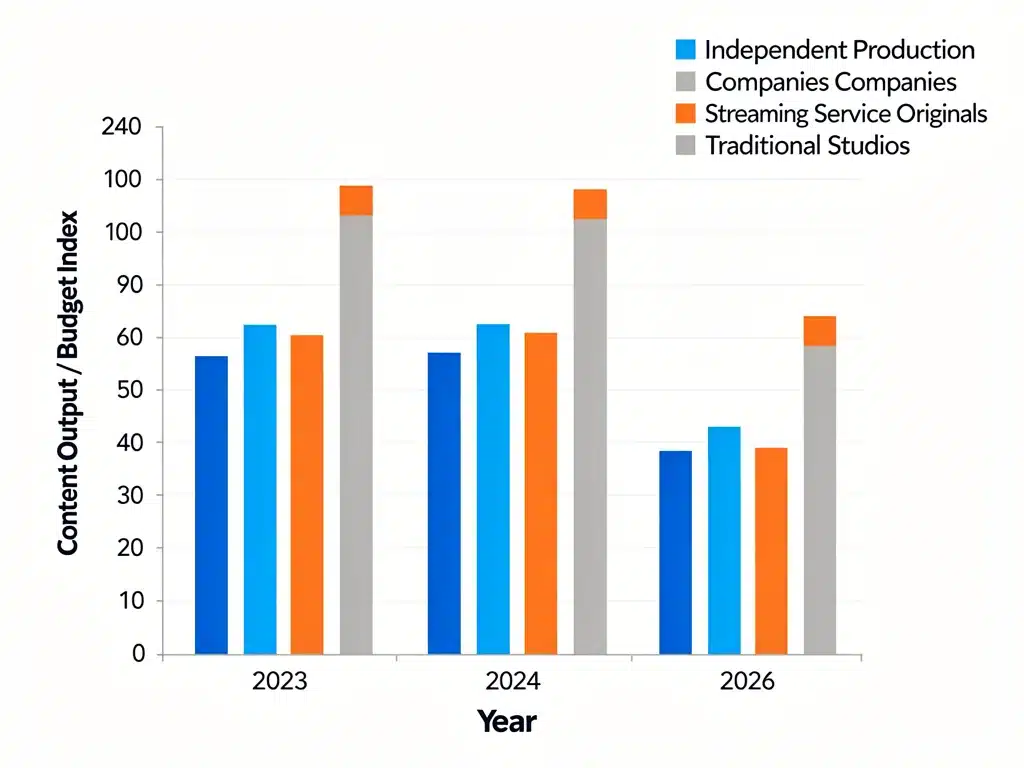
The increased competition for talent drives up production costs, as studios and streamers engage in bidding wars for top creatives. This escalation in talent fees can strain budgets, potentially leading to fewer, higher-budget productions or a greater reliance on international co-productions to share costs.
Moreover, the loss of key creatives can impact a studio’s ability to launch new franchises or maintain existing ones, directly affecting their revenue streams and market valuation. The financial implications are a critical aspect of assessing whether this is a Hollywood’s New Deal: Impact on 2026 Production & Budgets.
Studios will need to find innovative ways to optimize their spending, potentially by investing more in emerging talent or by creating more efficient production workflows to offset rising creative costs. Financial prudence will be paramount in this competitive environment.
Reshaping Creative Power Structures
The enhanced mobility of talent empowers creators with greater negotiating power, shifting the balance away from traditional studio executives. Creatives are increasingly becoming their own brands, leveraging their individual appeal to secure more favorable deals and greater artistic control.
This decentralization of creative power could lead to a more democratized industry, where a broader range of voices and perspectives gain prominence.
It challenges the long-standing hierarchical structures of Hollywood, forcing a re-evaluation of who holds creative authority. This fundamental shift is central to the AI Content Ethics: New Guidelines from US Studios in 2026.
As creators gain more autonomy, they may also take on more entrepreneurial roles, forming their own production companies and directly engaging with financiers and distributors. This entrepreneurial spirit is a defining characteristic of the evolving industry.
Case Studies: Notable Creative Moves in Early 2026
Examining specific instances of creative talent movement provides concrete examples of the trends discussed. These case studies highlight the diverse motivations behind individual decisions and the immediate ripple effects within the industry.
From acclaimed directors leaving established studios for streaming-exclusive deals to renowned writers launching independent production banners, these examples paint a vivid picture of the current landscape. Each move contributes to the broader narrative of Talent Exodus or Evolution.
Understanding the specifics of these high-profile transitions offers valuable insights into the strategies employed by both the creatives and the companies involved. These detailed accounts ground the theoretical discussion in real-world events and their consequences.
Director X’s Shift to Streamer Y
Director X, known for several critically acclaimed theatrical features with Studio A, recently announced an exclusive multi-year deal with Streamer Y.
The move reportedly involved a significant upfront payment and guaranteed creative control over a slate of projects, including a highly anticipated genre series.
Sources close to the director indicated a desire for greater creative freedom and the ability to explore longer-form storytelling without the pressures of traditional box office expectations.
This transition exemplifies the allure of streaming platforms for established cinematic talent, reinforcing the idea of Streaming Wars Intensify: 3 New Deals Reshape US Streaming by 2026.
Studio A, in response, has initiated a review of its director engagement policies, aiming to offer more competitive terms for its remaining top-tier talent. The impact on Studio A’s upcoming slate is still being assessed, with several projects now seeking new directorial leadership.
Writer-Producer Z’s Independent Venture
Writer-producer Z, a veteran of network television with a string of successful shows under Studio B, has launched a new independent production company, backed by a major investment fund. The new venture aims to develop character-driven dramas and comedies for various platforms.
Z cited a passion for developing original concepts from the ground up and a desire to foster new voices without the constraints of traditional network development cycles. This entrepreneurial spirit is a growing trend among experienced creatives, further blurring the lines between Talent Exodus or Evolution.
Studio B acknowledged Z’s departure, highlighting their long-standing relationship and wishing them well. The studio is now actively seeking to develop new internal showrunner talent to fill the void, indicating an internal evolution in response to external shifts.
The Future of Creative Partnerships
As the industry navigates these transformative times, the nature of creative partnerships is evolving. Future collaborations will likely be characterized by greater flexibility, innovative deal structures, and a mutual understanding of shared creative vision.
The era of exclusive, rigid long-term contracts may be giving way to more project-based agreements or hybrid deals that allow creatives to work across different platforms and studios. This flexibility could be a key factor in attracting and retaining top talent, defining the true nature of Talent Exodus or Evolution.
Ultimately, successful partnerships will be built on trust, transparency, and a genuine commitment to supporting artistic endeavors. Studios and production houses that prioritize these values are more likely to thrive in the competitive landscape of early 2026 and beyond.
Hybrid Deals and Multi-Platform Engagement
Increasingly, creatives are seeking hybrid deals that allow them to develop projects for both streaming and traditional theatrical release, or even across different streaming platforms. This multi-platform approach maximizes their reach and creative opportunities.
These complex agreements require innovative legal and business frameworks, moving beyond simplistic exclusive contracts. The ability to navigate these new structures will be a competitive advantage for studios and agencies, shaping the discourse on Talent Exodus or Evolution.
Creatives are looking for partners who can support their vision across various media, from feature films to episodic series, and even interactive content. This demands a versatile and adaptable approach to creative development and distribution.
Fostering a Creator-Centric Environment
The most successful production entities in the coming years will be those that prioritize a creator-centric approach. This means not only offering competitive compensation but also providing robust creative support, clear communication, and a culture that values artistic risk-taking.
Building strong, long-term relationships with creatives will involve more than just financial incentives; it will require a genuine investment in their career growth and artistic development.
This focus on nurturing talent is crucial in a landscape where creatives have more choices than ever before, directly influencing whether we see a The Rise of Interactive Narratives: A Deep Dive into US Studio Investments and Viewer Engagement Trends for 2026.
Mentorship programs, opportunities for cross-genre exploration, and clear pathways for career advancement will be key components of an attractive creative environment. Studios that understand and implement these principles will be better positioned to thrive.
| Key Aspect | Brief Analysis |
|---|---|
| Creative Mobility | Increased movement of top talent across studios and platforms. |
| Driving Factors | Creative freedom, evolving compensation, streaming growth. |
| Industry Response | Studios adapting with new deals and IP focus. |
| Future Outlook | More creator-centric partnerships and diversified content. |
Frequently Asked Questions About Creative Talent Movements
The current movement is characterized by a notable increase in high-profile directors, writers, and showrunners transitioning between major US production houses, streaming services, and independent studios. This trend is driven by a quest for greater creative control and more lucrative, flexible compensation models.
While some describe it as an exodus due to talent leaving traditional studios, it is more accurately viewed as an evolution. The industry is adapting to new distribution models and creative demands, leading to a redistribution of talent rather than a complete departure from the sector.
Streaming services are significant drivers, offering substantial financial incentives, global reach, and often more creative freedom compared to traditional studios. Their aggressive content acquisition strategies create highly attractive opportunities for top-tier creative professionals.
Traditional studios are responding by revamping talent deals, offering more competitive compensation, increasing creative input, and leveraging their vast intellectual property libraries. They are also investing in new technologies and fostering creator-centric environments to stay competitive.
The long-term implications include a more decentralized industry, increased production costs, and a shift in power dynamics towards creators. This will likely result in more diverse content, innovative storytelling, and a continuous adaptation of business models across the entertainment sector.
Perspectives and Implications
The ongoing shifts in creative talent mobility within the US production industry are more indicative of a profound evolution than a simple Talent Exodus or Evolution.
This period marks a critical juncture where established norms are being challenged, and new opportunities are rapidly emerging. It underscores a fundamental rebalancing of power and priorities.
Moving forward, the industry will need to continually adapt its strategies for talent acquisition, retention, and development. The focus will increasingly be on fostering environments that champion creative autonomy, offer equitable compensation, and embrace technological innovation.
This dynamic landscape promises a future rich with diverse storytelling and groundbreaking productions, as talent seeks the most fertile ground for their visions.
What happens now is a continuous negotiation between legacy institutions and disruptive forces, all vying for the minds that shape our entertainment.
Observers should monitor evolving contract structures, the success rates of new independent ventures, and how traditional studios integrate new technologies and talent management philosophies. This ongoing narrative of US Digital Entertainment Soars: 15% Growth in Q1 2026 will define the coming years in Hollywood.
