Console Gaming Accessibility in 2026: New Innovations Helping 1.5 Million US Gamers Play More Comfortably
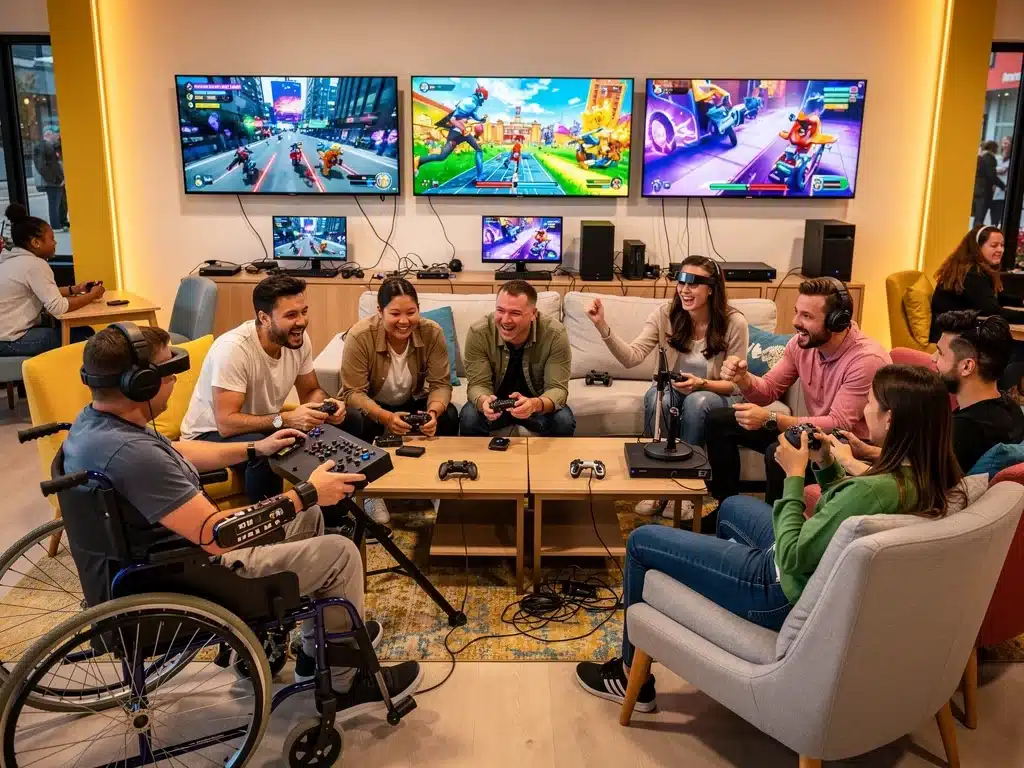
Imagine a world where everyone, regardless of physical ability, can pick up a controller and jump straight into the action. Console Gaming Accessibility is taking a massive leap forward, paving the way for over a million players across the United States to experience their favorite titles with unparalleled comfort.
This revolutionary shift is introducing next-generation hardware adaptations, fully customizable layouts, and deeply integrated system software.
From innovative adaptive joysticks to custom 3D-printed controller attachments, the industry is dismantling the physical barriers that once kept eager players on the sidelines.
As developers and tech giants roll out these highly anticipated inclusive upgrades, the entire gaming ecosystem is becoming more welcoming than ever.
Here is a closer look at the groundbreaking engineering that is rewriting the rules of interactive entertainment and empowering more people to play.
The Evolving Landscape of Console Gaming Accessibility in 2026
The year 2026 marks a pivotal moment for console gaming accessibility, with significant strides being made to integrate inclusive design from the ground up.
This evolution is driven by a combination of consumer demand, legislative pushes, and technological breakthroughs that are making previously impossible gaming experiences a reality for many.
Industry leaders are increasingly recognizing the vast, untapped market of gamers with disabilities. This recognition fuels investment in research and development, leading to a wave of innovations designed to break down long-standing barriers to play.
The goal is to move beyond mere compliance and towards genuine inclusion, where accessibility features are not add-ons but integral components of the gaming experience. This proactive approach is set to redefine how games are developed and played.
Key Technological Innovations Driving Accessibility Forward
Several technological advancements are at the forefront of improving Console Gaming Accessibility in 2026. These innovations span hardware, software, and user interface design, creating a multi-faceted approach to inclusivity.
From highly customizable controllers to sophisticated AI-driven assistance, the tools available to gamers are becoming more diverse and effective. These developments are not just about making games playable but about making them enjoyable and engaging for a wider audience.
The integration of these technologies is set to transform the daily gaming experience for an estimated 1.5 million US gamers, offering them unprecedented levels of comfort and control. This shift will allow more individuals to fully participate in the vibrant world of console gaming.
Modular and Adaptive Controllers
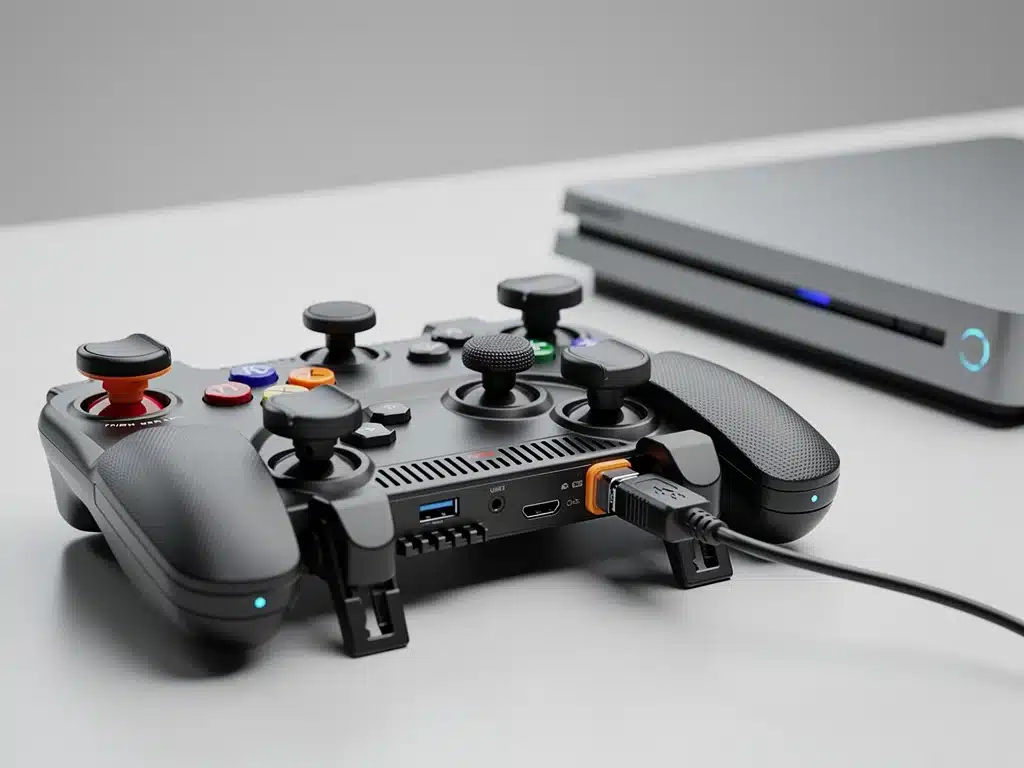
One of the most significant breakthroughs lies in modular and adaptive controllers. These devices allow for extensive customization, enabling gamers to configure their input methods to suit their specific physical needs.
Instead of a one-size-fits-all approach, these controllers offer interchangeable components, remappable buttons, and adjustable sensitivity. This flexibility ensures that gamers with varying degrees of mobility can find a setup that works for them, empowering them to engage with complex game mechanics.
Companies are investing heavily in these designs, collaborating with accessibility experts and the disabled gaming community to refine and improve functionality. The result is a growing ecosystem of highly personalized control options.
- Customizable Button Layouts: Remap any button to any function.
- Interchangeable Components: Swap joysticks, D-pads, and triggers.
- Adjustable Sensitivity: Fine-tune input response for precision.
- Third-Party Device Integration: Support for external switches and specialized inputs.
Advanced Software Accessibility Features
Beyond hardware, software innovations are playing a crucial role in enhancing Console Gaming Accessibility in 2026. Game developers are incorporating a wider array of accessibility options directly into their games, making them more inclusive from the start.
These features include comprehensive remapping options, adjustable difficulty settings that go beyond traditional easy/normal/hard modes, and robust visual and auditory aids. The goal is to provide granular control over the gaming experience.
Accessibility menus are becoming standard, offering options like colorblind modes, text-to-speech functionality, speech-to-text input, and customizable UI scaling. These tools ensure that games can be enjoyed by individuals with diverse sensory and cognitive needs.
Impact on 1.5 Million US Gamers: A Deeper Dive
The direct beneficiaries of these advancements in Console Gaming Accessibility in 2026 are the estimated 1.5 million US gamers who currently face barriers to fully enjoying console games. These innovations promise to unlock new worlds and experiences for them.
For many, gaming is not just a pastime but a vital source of social connection, mental stimulation, and emotional outlet. Enhanced accessibility means more opportunities for these individuals to participate in a beloved cultural phenomenon.
The impact extends beyond individual enjoyment; it fosters a more inclusive gaming community. As more people can participate, the diversity of perspectives and experiences within gaming will grow, enriching the entire ecosystem.
Breaking Down Physical Barriers
For gamers with physical disabilities, the new wave of adaptive controllers and input devices is revolutionary. These tools directly address limitations in motor control, dexterity, and strength, which have historically excluded many from console gaming.
The ability to customize controls to match specific physical capabilities means that games are no longer out of reach. This empowers individuals who might have previously relied on others to play, granting them independence and full agency in their gaming experiences.
This includes players with conditions like muscular dystrophy, cerebral palsy, spinal cord injuries, and limb differences, who will find a significantly expanded range of playable titles and more comfortable ways to interact with them.
Addressing Cognitive and Sensory Needs
Accessibility in 2026 also extends significantly to gamers with cognitive and sensory impairments. Software features like adjustable game speeds, simplified UI options, and robust visual/auditory cues are making games more approachable.
For individuals with conditions such as ADHD, autism spectrum disorder, or visual and hearing impairments, these features are transformative. They allow for a more personalized experience, reducing frustration and enhancing comprehension and engagement.
The goal is to provide options that cater to different processing speeds, sensory sensitivities, and learning styles, ensuring that the core enjoyment of gaming is accessible to a broader spectrum of minds and senses.
Industry Collaboration and Standardized Practices
The drive for improved Console Gaming Accessibility in 2026 is not a solo effort by individual companies. It is increasingly becoming a collaborative endeavor across the industry, with a push towards standardized practices and shared knowledge.
Console manufacturers, game developers, and accessibility advocacy groups are working together to establish best practices and guidelines. This collaboration ensures that accessibility features are implemented consistently and effectively across different platforms and titles.
The sharing of research and development resources also accelerates the pace of innovation, preventing redundant efforts and fostering a more unified approach to inclusive design. This collective effort strengthens the overall commitment to accessibility.
The Role of Console Manufacturers
Major console manufacturers are leading the charge by integrating accessibility features directly into their operating systems and hardware. This foundational support ensures that games developed for their platforms can leverage a robust suite of tools.
From system-level remapping to universal accessibility menus, these manufacturers are setting a high bar for what is expected in terms of inclusive design. Their commitment sends a clear message to developers about the importance of accessibility.
This top-down approach simplifies the development process for studios, providing them with a solid framework upon which to build accessible game experiences. It fosters an environment where accessibility is a core consideration, not an afterthought.
Future Outlook: Beyond 2026 for Console Gaming Accessibility
While 2026 marks a significant milestone, the journey towards ultimate Console Gaming Accessibility is ongoing. The innovations seen today are laying the groundwork for even more advanced and integrated solutions in the years to come.
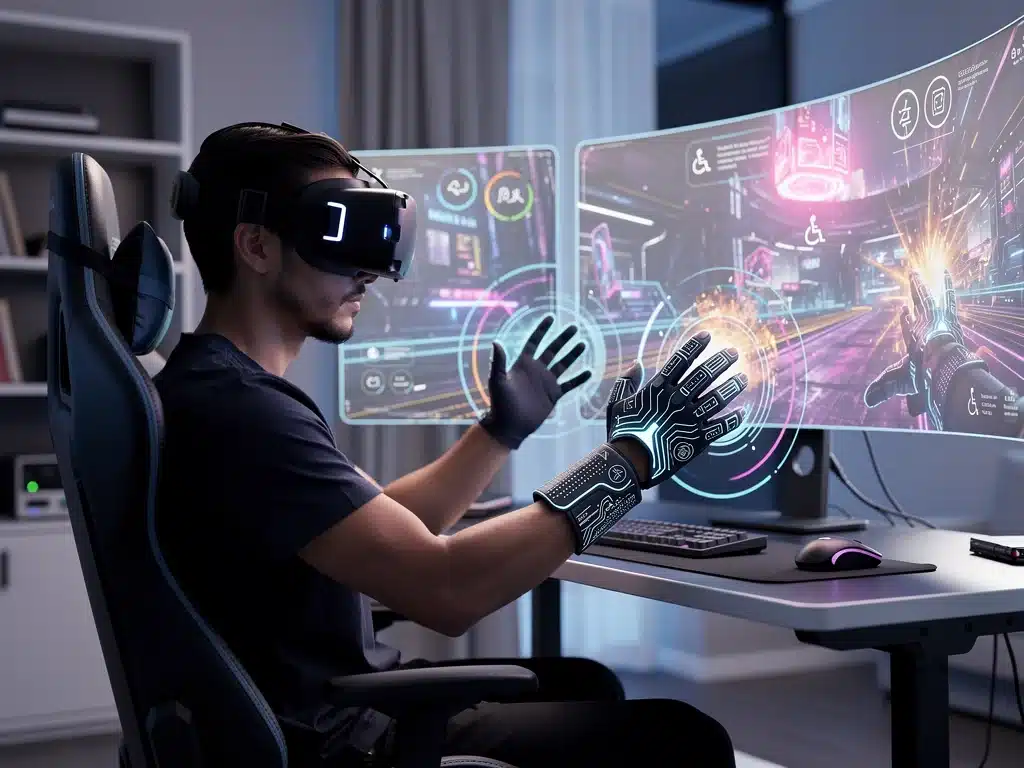
Research into brain-computer interfaces, advanced haptic feedback systems, and more sophisticated AI assistants promises to push the boundaries of what’s possible. These emerging technologies hold the potential to unlock gaming for even more individuals with complex needs.
The continuous feedback loop between gamers with disabilities, developers, and researchers will be crucial in refining existing solutions and pioneering new ones. The future of accessible gaming is one of constant evolution and improvement.
Emerging Technologies on the Horizon
Looking beyond 2026, several emerging technologies are poised to further revolutionize console gaming accessibility. Brain-computer interfaces (BCIs), while still in early stages, could offer entirely new ways for individuals with severe motor impairments to interact with games.
Enhanced haptic feedback systems are also gaining traction, providing tactile information that can supplement or replace visual and auditory cues, benefiting players with sensory impairments. These systems could create a richer, more immersive experience for all.
Furthermore, advancements in artificial intelligence are expected to lead to more dynamic and personalized accessibility assistants within games, adapting difficulty and controls in real-time based on individual player needs and preferences, making Console Gaming Accessibility in 2026 feel like just the beginning.
Challenges and Opportunities in Universal Design
Despite the rapid progress in Console Gaming Accessibility in 2026, challenges remain. Ensuring that accessibility features are not merely present but truly effective and user-friendly requires continuous effort and critical evaluation.
One primary challenge is the sheer diversity of disabilities and individual needs. A solution that works for one person may not work for another, necessitating highly customizable and flexible approaches rather than one-size-fits-all fixes.
However, these challenges also present significant opportunities. By striving for universal design principles, where games are inherently accessible to the widest possible audience, the industry can create more innovative and engaging experiences for everyone, not just those with disabilities.
Balancing Innovation with Practicality
A key aspect of advancing console gaming accessibility is finding the right balance between cutting-edge innovation and practical implementation. New technologies must be robust, reliable, and affordable to be truly impactful for the target audience.
Developers face the task of integrating complex accessibility features without compromising game performance or artistic vision. This requires thoughtful design and careful resource allocation throughout the development cycle.
The ongoing dialogue between the gaming community, accessibility experts, and developers is essential to ensure that innovations meet real-world needs and are integrated in a way that genuinely enhances the gaming experience for 1.5 million US gamers and beyond.
| Key Innovation | Description and Impact |
|---|---|
| Adaptive Controllers | Highly customizable hardware for diverse physical needs, enabling millions to play. |
| Software Features | In-game options like remapping, difficulty scaling, and sensory aids for broader inclusion. |
| Industry Collaboration | Standardized practices and shared R&D accelerate effective accessibility solutions. |
| Emerging Tech | BCIs and advanced haptics hint at future accessibility breakthroughs beyond 2026. |
Frequently Asked Questions About Console Gaming Accessibility
The primary goal is to ensure that console gaming is enjoyable and playable for everyone, regardless of physical, cognitive, or sensory abilities. This involves integrating inclusive design into hardware and software, aiming to remove barriers for an estimated 1.5 million US gamers and beyond, fostering a more inclusive gaming community.
Adaptive controllers offer extensive customization options, including modular components, remappable buttons, and adjustable sensitivity. This allows gamers with diverse physical needs to configure their input devices to suit their specific capabilities, providing greater control and comfort, which is central to Console Gaming Accessibility in 2026.
Standard software features include comprehensive remapping, customizable difficulty settings, colorblind modes, text-to-speech, speech-to-text, and UI scaling. These options allow players to tailor their experience to their sensory and cognitive needs, making games more approachable and enjoyable for a wider audience in 2026.
Industry collaboration, involving console manufacturers, developers, and advocacy groups, helps establish standardized practices and share knowledge. This collective effort accelerates innovation, ensures consistent implementation of features, and strengthens the overall commitment to making console gaming accessible across all platforms and titles in 2026.
Beyond 2026, emerging technologies like brain-computer interfaces (BCIs), advanced haptic feedback systems, and more sophisticated AI assistants hold significant promise. These innovations could offer entirely new ways for individuals with severe impairments to interact with games, pushing the boundaries of what is possible in Console Gaming Accessibility.
Looking Ahead
The developments in Console Gaming Accessibility in 2026 represent a significant leap forward for the industry, promising a more inclusive future for millions of gamers.
This ongoing evolution underscores a broader societal shift towards universal design and equitable access to digital entertainment.
The commitment from manufacturers and developers to integrate these innovations from the ground up sets a powerful precedent.
As technology continues to advance, the landscape of accessible gaming will undoubtedly continue to evolve, offering even more sophisticated and personalized experiences for all.
