The Impact of AI on Console Game Development by 2026: How it’s Shortening Production Cycles by 20%
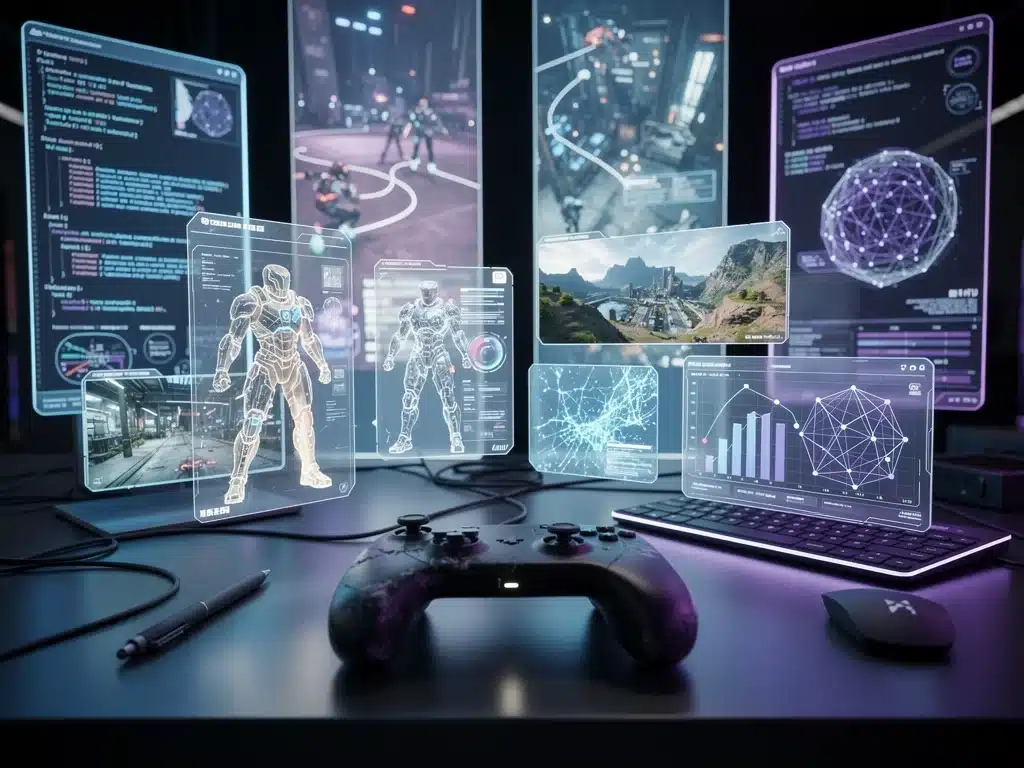
The days of waiting five to seven years for your next favorite AAA blockbuster are officially shrinking. As we power through this year, the integration of AI in Console Game Dev is driving a massive industry shift, cutting traditional studio pipelines by an impressive 20%.
Major publishers and studios are aggressively adopting machine learning toolsets to accelerate asset creation, streamline code debugging, and automate procedural world-generation.
These smart software suites aren’t replacing human creativity; they are supercharging how studios build massive open worlds under tight deadlines.
Industry insiders have just revealed new data on how this tech-driven efficiency is changing the gaming landscape. Here is a direct look at how automated game production tools are saving studios millions and what this accelerated release calendar means for gamers.
AI’s Role in Accelerating Pre-Production Phases
The initial stages of console game development, traditionally time-consuming, are experiencing a profound acceleration due to AI integration. Concept generation, storyboarding, and early prototyping are becoming significantly more efficient.
AI algorithms can analyze vast datasets of popular games and player preferences to suggest innovative ideas and narrative structures.
This analytical capability allows development teams to explore a wider range of creative directions in a fraction of the time previously required.
Early visualization tools powered by AI can rapidly generate diverse art styles and environmental concepts, providing immediate feedback for design iterations. This rapid ideation cycle is a cornerstone of the projected 20% shortening of production timelines.
Moreover, AI is instrumental in automating the creation of initial game mechanics and level layouts, offering developers functional prototypes much faster.
This not only saves valuable time but also frees up human talent to focus on refining complex gameplay elements and artistic direction. The impact on AI Console Game Development is already palpable.
Automated Asset Generation and Optimization
One of the most significant contributions of AI to game development lies in automated asset creation. Generating 3D models, textures, and animations has historically been a labor-intensive process, often consuming a substantial portion of a project’s budget and timeline.
AI-powered tools can now generate high-quality assets with remarkable speed and consistency, significantly reducing manual workload. These tools can adapt to specific artistic styles and technical requirements, ensuring seamless integration into the game environment. This efficiency directly contributes to shortening overall production cycles.
- AI can rapidly generate variations of environmental objects, characters, and props.
- Texture synthesis algorithms create detailed surfaces based on minimal input.
- Automated animation tools streamline character movement and facial expressions.
The optimization capabilities of AI extend beyond generation, including automatic mesh reduction, LOD (Level of Detail) generation, and performance analysis.
This ensures that assets are not only visually appealing but also optimized for console hardware, preventing performance bottlenecks and further streamlining the development process.
Enhancing Game Design and Level Creation with AI
AI’s influence is dramatically reshaping how game designers approach level creation and overall game architecture. Procedural content generation (PCG) fueled by AI allows for the rapid creation of expansive and diverse game worlds that would be impossible to craft manually within tight deadlines.
This capability is pivotal for open-world titles and games requiring extensive replayability.
Beyond mere generation, AI assists in optimizing level flow, balancing difficulty, and identifying potential design flaws before extensive testing.
By simulating player behavior and analyzing gameplay metrics, AI can provide actionable insights, leading to more engaging and polished experiences. This iterative design process, accelerated by AI, is crucial for achieving the targeted 20% production cycle reduction.
The ability of AI to learn from player data and adapt game environments dynamically creates more responsive and personalized gaming experiences.
This not only enhances player immersion but also provides developers with a powerful tool for continuous improvement and innovation in game design. The strides in AI Console Game Development are undeniable.
AI in Quality Assurance and Testing
Traditional game testing is a resource-intensive process, often involving large teams of testers meticulously searching for bugs and glitches.
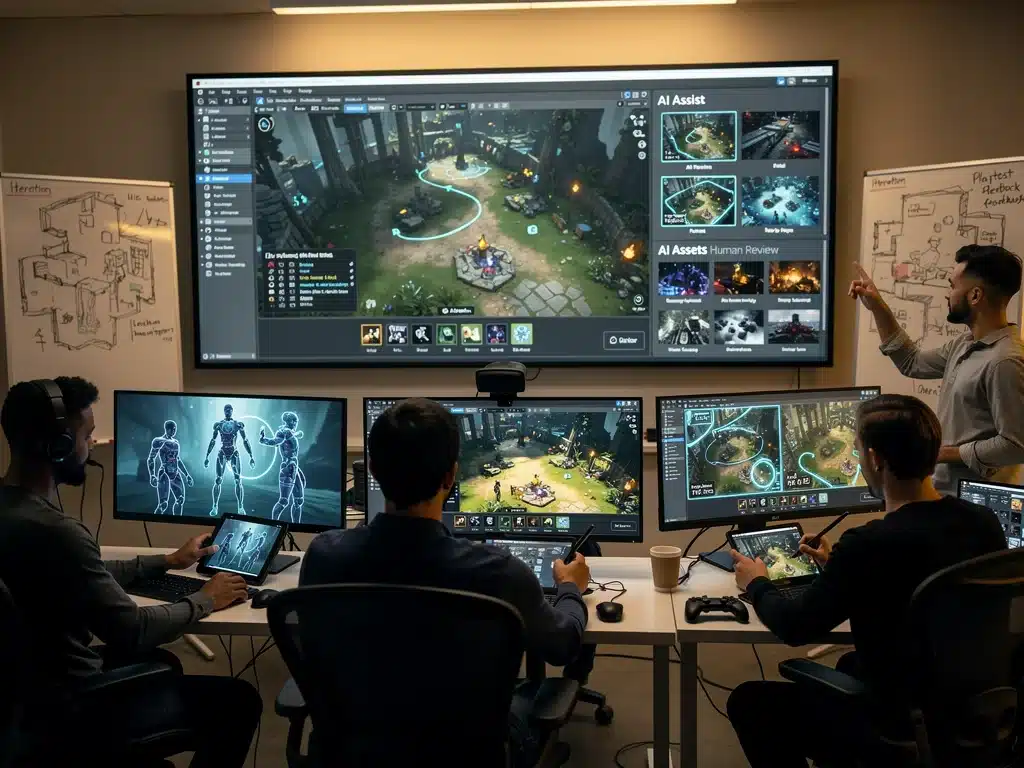
AI is revolutionizing this phase by automating significant portions of quality assurance (QA). AI-driven testing frameworks can execute thousands of test cases in minutes, identifying issues far more rapidly than human testers.
These systems can simulate diverse player behaviors, stress-test game mechanics, and pinpoint performance bottlenecks with precision.
This not only accelerates the bug-fixing process but also ensures a higher level of game stability and polish at launch. The efficiency gained in QA is a critical factor in shortening overall development timelines.
- Automated playtesting identifies critical bugs and exploits.
- Performance profiling tools optimize game code for console hardware.
- AI can predict potential issues based on early development data.
By offloading repetitive and systematic testing tasks to AI, human QA teams can focus on more nuanced aspects, such as player experience, balance, and creative feedback.
This symbiotic relationship between human and artificial intelligence is key to the future of console game development.
Streamlining Post-Production and Live Service Updates
The impact of AI extends beyond the initial development phase, significantly influencing post-production and the burgeoning live-service model of many modern console games.
Patching, content updates, and ongoing maintenance can be resource-heavy, but AI is providing solutions to streamline these processes. This directly contributes to the overall efficiency and longevity of games, reinforcing the benefits of AI Console Game Development.
AI algorithms can analyze player feedback and in-game data to prioritize bug fixes and suggest new content that aligns with player preferences.
This data-driven approach ensures that post-launch efforts are highly targeted and impactful, maintaining player engagement and satisfaction. The ability to rapidly iterate and deploy updates is a competitive advantage.
Furthermore, AI can automate the localization process, translating in-game text and dialogue for global audiences with greater speed and accuracy.
This reduces the time and cost associated with bringing games to international markets, expanding their reach and revenue potential. This continuous improvement cycle is vital for modern console titles.
Ethical Considerations and Job Evolution
While the benefits of AI in shortening production cycles are clear, the ethical implications and the evolution of job roles within the industry warrant careful consideration.
Concerns about job displacement are natural, but the prevailing sentiment among industry leaders is that AI will augment, rather than replace, human creativity. The focus shifts to collaboration.
New roles are emerging, such as AI trainers, prompt engineers for generative AI, and AI ethicists within game studios.
Developers will increasingly work alongside AI tools, leveraging them to handle routine tasks and unlock new creative possibilities. This requires a workforce that is adaptable and continuously upskilling to harness AI’s full potential.
- AI will automate repetitive tasks, freeing up human creativity.
- New specialized roles focused on AI integration and oversight will emerge.
- Continuous learning and adaptation are crucial for developers.
Addressing bias in AI models and ensuring responsible use of generative AI are paramount. The industry must establish ethical guidelines to ensure that AI-driven development practices uphold fairness, inclusivity, and artistic integrity, maintaining the unique human touch in gaming experiences.
This thoughtful approach is crucial for sustainable AI Console Game Development.
Challenges and Limitations in AI Integration
Despite the immense promise, the widespread integration of AI into console game development faces several challenges and limitations that need to be addressed.
The initial investment in AI infrastructure, specialized talent, and training can be substantial for many studios. This upfront cost can be a barrier, especially for smaller independent developers.
Another significant hurdle is the need for high-quality, diverse datasets to train effective AI models. Poor data can lead to biased or uninspired AI outputs, requiring extensive human correction and refinement.
Ensuring the creative originality of AI-generated content also remains a complex issue, as models often learn from existing works.
Furthermore, the rapidly evolving nature of AI technology means that studios must constantly adapt and update their tools and expertise. Staying at the forefront of AI innovation requires continuous investment and a culture of experimentation.
Navigating these complexities is essential for realizing the full potential of AI Console Game Development.
Data Security and Intellectual Property
The use of AI in game development raises critical questions regarding data security and intellectual property. Training AI models often involves proprietary game assets, code, and design documents, necessitating robust security measures to prevent breaches.
Protecting sensitive information from unauthorized access or misuse is paramount for studios.
Moreover, the legal landscape surrounding AI-generated content and intellectual property ownership is still largely undefined. Who owns the copyright to assets or narrative elements created by an AI?
These questions require clear legal frameworks and industry standards to ensure fair compensation and protection for creators. The complexity of these issues highlights the need for careful consideration.
- Robust data security protocols are essential for protecting proprietary information.
- Clarifying intellectual property rights for AI-generated content is an ongoing challenge.
- Legal and ethical guidelines are needed for responsible AI deployment.
Studios must navigate these legal and ethical ambiguities to fully leverage AI without compromising their creative assets or the rights of their human artists and developers. Addressing these concerns proactively will be vital for the sustainable growth of AI Console Game Development.
Future Outlook: Beyond 2026 and Hyper-Personalization
Looking beyond 2026, the trajectory of AI in console game development points towards even more profound transformations, especially in the realm of hyper-personalization.
Future AI systems are expected to create gaming experiences that dynamically adapt to individual player styles, preferences, and even emotional states. This level of customization could redefine player immersion.
Imagine games that intelligently adjust their narrative branches, character interactions, or environmental challenges in real-time to provide a uniquely tailored experience for every player.
This goes beyond simple difficulty scaling, venturing into truly adaptive storytelling and gameplay design. The potential for replayability and player engagement is immense.
Furthermore, AI could facilitate the creation of truly emergent gameplay, where complex systems interact in unpredictable ways, leading to novel and unforgettable moments.
This move towards more dynamic and responsive game worlds will solidify the role of AI Console Game Development as a cornerstone of future gaming innovation.
The Rise of AI-Powered Game Engines
The evolution of game engines themselves is inextricably linked to AI advancement.
Next-generation game engines are likely to be deeply integrated with AI capabilities, offering developers intuitive tools for AI-driven asset generation, procedural world-building, and intelligent character behavior. This will further democratize game creation.
These AI-powered engines will streamline workflows to an unprecedented degree, allowing smaller teams to produce games of a scale and complexity previously reserved for large studios.
The barrier to entry for aspiring game developers could significantly lower, fostering a new wave of creativity and innovation in the industry. This technological leap will be transformative.
- Game engines will incorporate native AI tools for various development tasks.
- Smaller studios will gain access to advanced production capabilities.
- The overall efficiency of game creation will reach new heights.
The synergy between advanced AI and powerful game engines will not only continue to shorten production cycles but also fundamentally change the creative process itself, pushing the boundaries of what is possible in interactive entertainment.
This future vision of AI Console Game Development is both exciting and challenging.
| Key Aspect | Impact Description |
|---|---|
| Production Cycles | Projected 20% reduction by 2026 due to AI automation and efficiency. |
| Asset Creation | AI automates generation of models, textures, and animations, saving significant time. |
| Quality Assurance | AI-driven testing frameworks rapidly identify bugs and optimize performance. |
| Hyper-Personalization | Future AI to create dynamically adaptive and tailored gaming experiences. |
Frequently Asked Questions About AI in Game Development
AI shortens cycles by automating repetitive tasks like asset generation, streamlining quality assurance, and accelerating pre-production phases. This efficiency gain allows developers to focus on creative aspects, reducing overall development time by an estimated 20% by 2026.
Key areas benefiting from AI include automated asset creation (3D models, textures), procedural content generation for levels, intelligent testing for bug detection, and data-driven insights for game design. These applications significantly boost efficiency across the entire development pipeline.
No, AI is expected to augment human capabilities rather than replace them. It will handle routine tasks, freeing developers to focus on creativity, complex problem-solving, and artistic direction. New roles related to AI integration and oversight are also emerging within studios.
Challenges include the high initial investment in AI infrastructure, the need for quality training data, concerns about creative originality, and evolving legal frameworks for AI-generated content. Data security and intellectual property rights also present significant hurdles for studios.
AI will lead to more personalized and dynamic player experiences, with games adapting to individual preferences and playstyles. It will also facilitate richer, more expansive game worlds through procedural generation, enhancing replayability and immersion for players on console platforms.
Looking Ahead: The Evolving Landscape
The profound changes brought by The Impact of AI on Console Game Development are not merely a forecast but an ongoing reality.
This transformation signifies a new era for the gaming industry, promising faster innovation, more complex worlds, and deeply personalized experiences. Studios must continue to invest in AI research and development, fostering a culture of adaptability and ethical deployment.
As AI tools become more sophisticated and integrated into development pipelines, the line between human and artificial creativity will blur, leading to novel forms of artistic expression.
The industry will need to navigate these shifts carefully, ensuring that technological advancement serves to enhance, rather than diminish, the human element of game creation. The future of console gaming is intrinsically linked to these advancements.
Monitoring the evolution of AI-powered game engines, the emergence of new job roles, and the ongoing discussions around ethical AI use will be crucial.
The pace of change is rapid, and staying informed about these developments will provide a competitive edge in an increasingly AI-driven market. The journey of AI Console Game Development is just beginning.
