PC Gaming Storage: SSD vs. NVMe in 2026 for US Gamers
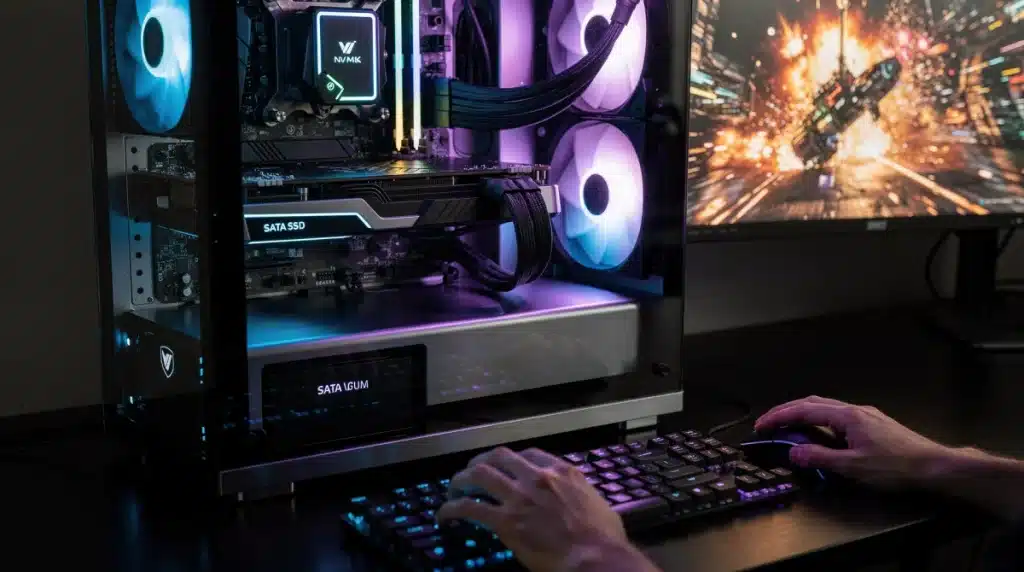
Upgrading your desktop setup to handle modern, asset-heavy titles requires choosing the right drive hardware for your rig. Selecting high-performance PC Gaming Storage eliminates frustrating loading screens and optimizes system responsiveness during intense gameplay sessions across modern titles.
Solid-state technology and ultra-fast M.2 PCIe drives have replaced legacy spinning hard disks, delivering massive bandwidth improvements for texture streaming.
Choosing high-speed non-volatile memory architectures ensures smooth open-world rendering and seamless DirectStorage integration in high-end gaming builds.
Understanding speed differences and throughput limits helps you maximize performance without overspending on unnecessary drive specs. Here is how standard SATA drives and next-gen NVMe modules compare for American PC enthusiasts this year.
The Evolving Landscape of PC Gaming Storage in 2026
The gaming industry is witnessing unprecedented growth in game fidelity and complexity, directly impacting storage requirements.
As titles become more immersive, the demand for faster and larger storage solutions intensifies, pushing traditional hard drives further into obsolescence for primary gaming.
In 2026, US gamers face a crucial decision when building or upgrading their systems: navigating the advanced options available for PC Gaming Storage Solutions.
This decision directly influences loading times, in-game asset streaming, and overall system responsiveness, which are critical for a seamless gaming experience.
The market is predominantly split between SATA SSDs and NVMe SSDs, each offering distinct advantages and considerations. Understanding their core differences and performance metrics is the first step towards making an informed choice that aligns with both budget and performance goals.
Authorities confirmed new timelines and outlined initial impacts across different regions regarding storage technology adoption. Statements from representatives indicate short-term adjustments and a more defined path for upcoming decisions in the hardware sector.
Recent data helps clarify the scope and sequence of events in the storage market. Manufacturers and local communities reacted as information became public, with agencies coordinating responses under established protocols to meet consumer demand.
SSD Technology: The Foundation of Modern Gaming Storage
SATA Solid State Drives (SSDs) revolutionized PC gaming by dramatically reducing load times compared to traditional Hard Disk Drives (HDDs).
Their widespread compatibility and more accessible price point have made them a staple for many gamers upgrading older systems or seeking cost-effective performance boosts.
While not the absolute fastest option available in 2026, SATA SSDs still offer a significant performance upgrade over HDDs, making them a viable choice for general gaming and secondary storage.
Their peak read/write speeds typically hover around 550 MB/s, which is ample for many current-generation games.
Many US gamers continue to utilize SATA SSDs for their primary game installations, especially for titles that do not heavily rely on ultra-fast asset streaming. They represent a solid baseline for efficient PC Gaming Storage Solutions, providing a balance of speed and affordability.
NVMe SSDs: Unlocking Next-Generation Performance
NVMe (Non-Volatile Memory Express) SSDs represent the pinnacle of current PC Gaming Storage Solutions, leveraging the PCIe interface for unparalleled speed. These drives can achieve read/write speeds several times faster than SATA SSDs, with top-tier models exceeding 7,000 MB/s.
This exponential increase in speed translates directly into near-instantaneous game loading, seamless texture streaming, and overall system responsiveness that significantly enhances the gaming experience. For competitive gamers and enthusiasts, NVMe is becoming the de facto standard.
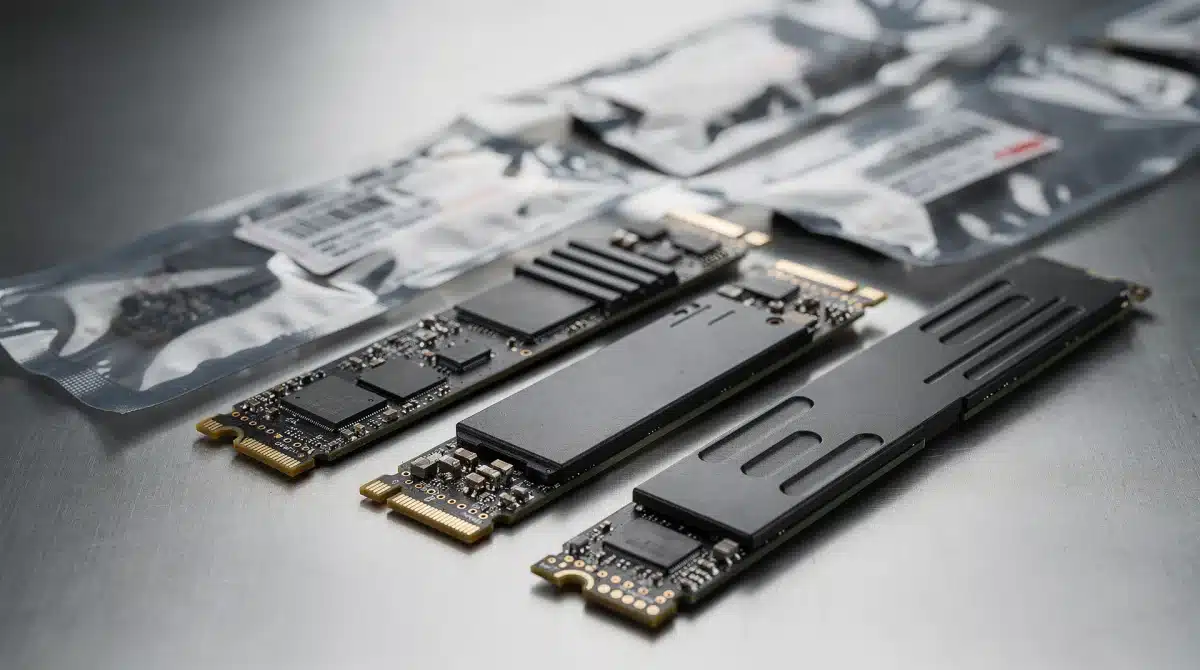
The compact M.2 form factor of most NVMe drives also contributes to cleaner PC builds, reducing cable clutter and improving airflow. This combination of speed and form factor makes them ideal for modern motherboards and high-performance gaming rigs.
The topic’s background connects the update to previous milestones in storage development. Analysts highlight short-term signals that deserve attention before broader trends become clear in the adoption of faster drives for PC Gaming Storage Solutions.
Practical Solutions for US Gamers in 2026
For US gamers, selecting the right storage involves balancing performance, capacity, and budget. While NVMe offers superior speed, its higher cost per gigabyte compared to SATA SSDs means strategic allocation is key. A common approach involves a hybrid setup.
Many gamers opt for a high-speed NVMe drive for their operating system and most frequently played, demanding titles. This ensures the fastest boot times and optimal performance for their core gaming library, truly maximizing their PC Gaming Storage Solutions.
Complementing this, a larger capacity SATA SSD or even a traditional HDD can serve as secondary storage for less demanding games, media, and other files. This tiered approach allows gamers to leverage the best of both worlds without breaking the bank.
Optimizing Your Storage Configuration
- Prioritize NVMe for OS and demanding games: Install Windows and your favorite competitive titles on the fastest NVMe drive for maximum speed.
- Utilize SATA SSDs for secondary storage: Store less frequently played games, older titles, and general applications here to free up NVMe space.
- Consider external storage for backups: For archiving vast game libraries or personal media, external HDDs offer cost-effective, high-capacity solutions.
Direct quotes and attributed summaries show positions, responsibilities, and next steps for manufacturers in the storage sector. Independent experts assess the credibility of the information and likely outcome scenarios for future advancements in PC Gaming Storage Solutions.
Future Trends: PCIe Gen 5 and Beyond
As of 2026, PCIe Gen 5 NVMe SSDs are becoming more prevalent, pushing performance boundaries even further. These drives offer theoretical speeds up to 14,000 MB/s, though real-world applications are still catching up to fully utilize this bandwidth.
While current games may not fully saturate PCIe Gen 4 speeds, let alone Gen 5, investing in newer generation NVMe drives provides future-proofing for upcoming titles and technologies. DirectStorage, a feature in Windows, aims to leverage these speeds for faster asset loading, bypassing CPU bottlenecks.
The continuous innovation in NVMe technology means that PC Gaming Storage Solutions will only get faster and more efficient. Gamers should keep an eye on motherboard compatibility and cooling solutions, as these ultra-fast drives can generate significant heat.
For now, practical effects are concentrated in specific areas, while broader impacts depend on future decisions and compliance with new guidelines from hardware developers. This ensures a steady evolution of PC Gaming Storage Solutions.
Addressing Capacity Concerns in 2026
Game sizes continue to grow, with many AAA titles exceeding 100 GB, and some even pushing 200 GB. This trend makes high-capacity storage a necessity, not a luxury, for serious US gamers. Balancing speed with ample space is a core challenge.
Fortunately, the cost per gigabyte for both SSD and NVMe drives has steadily decreased, making larger capacities more accessible. 2TB NVMe drives are now common, and 4TB options are becoming more affordable, offering robust PC Gaming Storage Solutions.
For those with extensive game libraries, a multi-drive setup remains the most practical solution. Combining a smaller, fast NVMe for critical games with a larger SATA SSD or even an HDD for overflow ensures both performance and ample storage space.
Managing Your Game Library Effectively
- Uninstall infrequently played games: Free up valuable space by regularly reviewing and uninstalling titles you no longer play.
- Utilize game launchers’ library management: Platforms like Steam and Epic Games Store offer tools to manage installed games and move them between drives.
- Consider cloud gaming for select titles: For games that don’t require ultra-low latency, cloud gaming can offload storage requirements from your local machine.
Understanding these options allows gamers to make informed decisions, ensuring their systems are equipped with optimal PC Gaming Storage Solutions for the demands of 2026 and beyond.
Installation and Compatibility Considerations
Installing NVMe drives requires a motherboard with M.2 slots, typically supporting PCIe Gen 3, Gen 4, or Gen 5. Most modern motherboards include at least one M.2 slot, with many high-end boards offering multiple, ensuring flexible PC Gaming Storage Solutions.
SATA SSDs, on the other hand, connect via SATA data and power cables, compatible with virtually any desktop PC. This makes them an easy upgrade path for older systems that lack M.2 slots, or for adding additional storage capacity.
Before purchasing, gamers should always verify their motherboard’s specifications for M.2 slot availability, supported PCIe generations, and form factors (e.g., 2280). Ensuring compatibility prevents frustration and maximizes the benefits of new storage hardware.
| Key Storage Aspect | Practical Insight for Gamers |
|---|---|
| NVMe Speed Advantage | Essential for OS and demanding AAA titles for minimal load times. |
| SATA SSD Value | Cost-effective for secondary game storage and general applications. |
| Hybrid Storage Strategy | Best balance of performance and capacity with tiered drive usage. |
| Future-Proofing with PCIe 5 | Invest in newer NVMe generations for upcoming game technologies like DirectStorage. |
Frequently Asked Questions About PC Gaming Storage
While NVMe offers significant speed advantages, it’s not strictly necessary for every gamer. Casual players or those on a budget might find SATA SSDs perfectly adequate for most titles. However, for competitive gamers or those playing graphically intensive, open-world games, NVMe provides a noticeable performance boost.
Absolutely. Many gamers adopt a hybrid approach, using an NVMe drive for the operating system and key games, and a larger SATA SSD for additional games and general storage. This configuration maximizes speed where it matters most while providing ample overall capacity.
Given increasing game sizes, a minimum of 1TB for primary game storage is recommended. Many opt for 2TB or even 4TB drives to accommodate larger libraries. A combination of a smaller, fast NVMe and a larger secondary drive is a popular and practical solution.
Several reputable brands offer excellent PC Gaming Storage Solutions, including Samsung, Western Digital, Crucial, and Kingston. Researching specific models within these brands and reading reviews from trusted tech sites can help identify the best fit for your needs and budget.
DirectStorage is a Windows API designed to improve game loading times by allowing the GPU to decompress game assets directly from NVMe SSDs, bypassing the CPU. This technology is expected to fully leverage the speeds of PCIe Gen 4 and Gen 5 NVMe drives, making them even more critical for future gaming performance.
Looking Ahead: The Impact of Advanced Storage
The continuous evolution of PC Gaming Storage Solutions, particularly the advancements in NVMe technology, underscores a critical shift in how games are developed and experienced.
As PCIe Gen 5 becomes mainstream and DirectStorage gains wider adoption, the performance gap between different storage tiers will become more pronounced.
US gamers who prioritize speed and seamless gameplay will find NVMe an increasingly indispensable component of their systems, reshaping expectations for loading screens and in-game fluidity. Monitoring these developments ensures optimal gaming in the years to come.
