AI in Hollywood: 7 Key Shifts by Late 2026
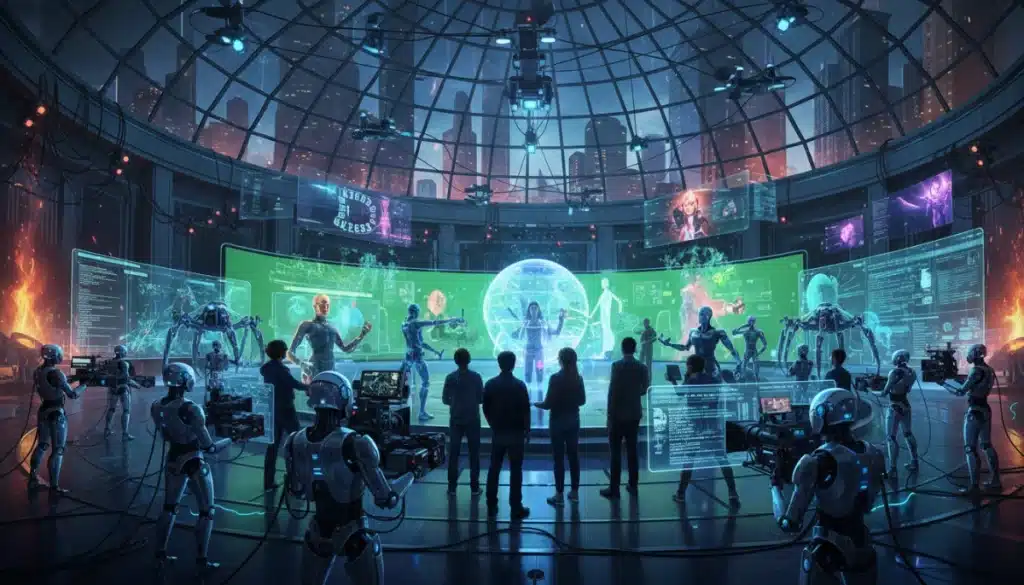
AI in Hollywood is no longer a distant concept, it’s becoming a defining force behind how movies and television are created. As late 2026 approaches, studios, creators, and audiences are witnessing changes that could reshape the entertainment landscape for years to come.
From virtual production tools to automated post-production workflows, emerging technologies are accelerating creative processes while raising new questions about ownership, compensation, and artistic control. The pace of innovation is forcing the industry to adapt faster than ever.
This article examines seven major shifts expected to influence filmmaking, visual effects, talent agreements, and digital storytelling. Whether you’re a film enthusiast or an industry observer, these developments offer a glimpse into the next chapter of modern entertainment.
The Proliferation of AI in Pre-Production Processes
AI’s influence is already palpable in the initial stages of filmmaking, from script development to conceptual art. These tools promise to streamline workflows, reducing the time and resources traditionally required for pre-production.
Screenwriters and directors are increasingly leveraging AI to generate ideas, refine narratives, and even visualize complex scenes. This integration is not merely an enhancement but a fundamental reshaping of creative inception.
The efficiency gains from AI in pre-production are expected to accelerate project timelines and foster greater creative exploration. This advancement marks a significant juncture for the industry.
AI-Driven Script Analysis and Generation
AI algorithms are now capable of analyzing vast databases of scripts to identify successful narrative patterns, character arcs, and dialogue structures. This capability assists writers in crafting more compelling stories.
Some AI tools can even generate initial script drafts or suggest alternative plot points, acting as a collaborative partner for human writers. This co-creation model is becoming increasingly prevalent, altering the traditional solitary writing process.
The potential for AI to enhance storytelling is immense, offering data-driven insights that can improve audience engagement and critical reception. This shift promises to elevate creative output.
- AI analyzes existing scripts to predict audience reception.
- Generative AI assists in drafting dialogue and scene descriptions.
- Tools provide feedback on narrative pacing and character development.
Virtual Production and Concept Art Evolution
Virtual production, powered by AI, allows filmmakers to visualize and iterate on sets and environments in real-time, long before physical production begins. This technology provides unprecedented control over visual elements.
AI-powered tools also accelerate the creation of concept art, generating diverse visual styles and designs based on textual prompts or preliminary sketches. This speeds up the creative visualization phase significantly.
These advancements lead to more efficient planning and execution, minimizing costly reshoots and enhancing the overall aesthetic quality of productions. The creative landscape is being reimagined.
- AI renders detailed virtual sets for pre-visualization.
- Generative AI creates concept art from textual descriptions.
- Real-time adjustments to virtual environments become standard.
Transformative Shifts in Production Workflows
Beyond pre-production, AI is revolutionizing the actual filming and post-production phases, impacting everything from camera operation to special effects. These changes are making production faster and more cost-effective.
Drone technology, AI-powered cameras, and intelligent editing software are becoming standard tools in Hollywood. This technological infusion redefines traditional roles and introduces new skill sets into the industry.
The integration of AI in these workflows promises higher production quality and greater creative flexibility. This evolution is central to the future of filmmaking.
Automated Filmmaking and Robotics
Robotic cameras and drones, guided by AI, can execute complex shots with precision and repeatability, often surpassing human capabilities. This automation opens new creative avenues for cinematography.
These systems can track actors, stabilize footage, and even adapt to changing lighting conditions autonomously. This reduces the need for large film crews and enhances consistency across takes.
The deployment of AI-driven robotics is set to become a cornerstone of modern film production, offering efficiency and unparalleled technical prowess. This represents a significant leap forward in production.
- AI-guided drones capture intricate aerial shots automatically.
- Robotic camera systems ensure precise and repeatable movements.
- Automated tracking and stabilization enhance visual quality.
AI in Visual Effects and Post-Production
AI algorithms are dramatically accelerating the creation of visual effects (VFX), allowing for more sophisticated and realistic imagery. This reduces the labor-intensive nature of traditional VFX work.
Tools for automatic rotoscoping, deepfake generation, and realistic digital character animation are now readily available. These advancements empower artists to achieve complex visual feats with greater ease.
Post-production workflows are becoming more efficient, enabling faster turnaround times and higher fidelity in the final product. This is a game-changer for the visual aspects of storytelling.
- AI automates complex rotoscoping and masking tasks.
- Generative AI creates realistic digital environments and characters.
- Intelligent editing software streamlines footage assembly and color grading.
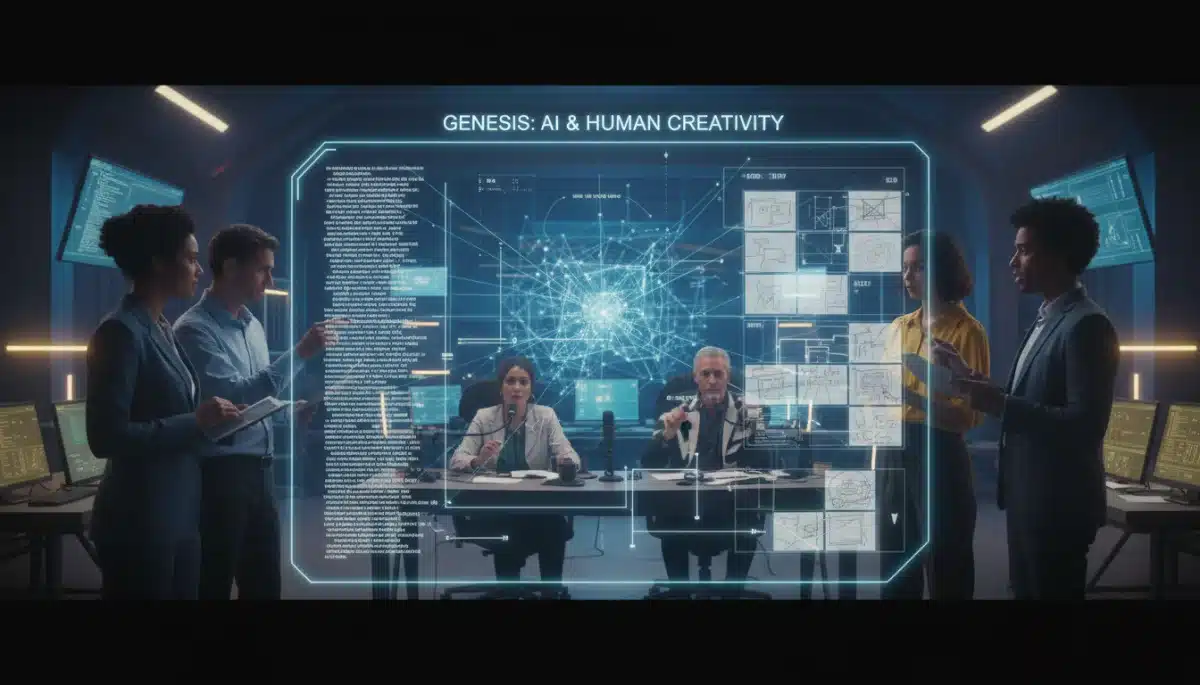
Redefining Creator Compensation Models
The rise of AI presents significant challenges and opportunities for creator compensation, particularly concerning intellectual property rights and fair payment. These discussions are at the forefront of industry negotiations.
Traditional royalty and residual structures are being reevaluated as AI generates content or assists in its creation. New models are emerging to address the economic implications for writers, actors, and artists.
Ensuring equitable compensation in an AI-powered creative landscape is paramount for maintaining a thriving artistic community. This is a critical discussion for the industry’s future.
Intellectual Property and Usage Rights
The ownership of content generated or significantly assisted by AI is a complex legal and ethical issue. Clear guidelines are needed to protect human creators’ intellectual property.
Discussions are ongoing regarding how to attribute and compensate creators when their work is used to train AI models or when AI tools are used in the creative process. This necessitates new contractual frameworks.
Establishing fair usage rights and compensation mechanisms is crucial to avoid exploitation and ensure artists benefit from technological advancements. This legal evolution is vital for creator protection.
New Compensation Structures for AI-Assisted Work
As AI becomes more integrated into creative workflows, new compensation models are being proposed to reflect the value added by AI tools and the human input. These models aim for fairness and transparency.
Some proposals include a hybrid compensation system, where creators receive a base fee plus a share of profits from AI-generated content. Other models suggest a licensing approach for AI-assisted outputs.
The goal is to ensure that artists are adequately rewarded for their contributions, whether directly or indirectly through AI integration. This economic adaptation is essential for sustainability.
Ethical Considerations and Job Displacement
The rapid adoption of AI in Hollywood raises significant ethical questions regarding job security, the nature of creativity, and potential biases embedded in AI systems. These concerns require careful consideration.
While AI promises efficiency, it also poses a threat of job displacement for certain roles within the industry. Addressing these concerns proactively is vital for a smooth transition.
Ensuring ethical AI development and deployment is critical to maintaining a human-centric creative industry. This balancing act is a key challenge for Hollywood.
Addressing Job Displacement and Reskilling
As AI automates tasks previously performed by humans, there is a legitimate concern about job losses in areas like visual effects, editing, and even certain aspects of acting. This necessitates strategic planning.
Industry stakeholders are exploring initiatives for reskilling and upskilling the workforce, preparing them for new roles that involve collaborating with AI. Education and training programs are becoming essential.
The transition requires a focus on human-AI collaboration, where AI augments human capabilities rather than replacing them entirely. This adaptation is crucial for workforce stability.
Bias in AI and Creative Integrity
AI models are trained on existing data, which can inadvertently carry biases present in that data, leading to stereotypical or unrepresentative content. This poses a threat to creative integrity and diversity.
Ensuring that AI tools are developed and used responsibly, with a focus on mitigating bias, is a critical ethical imperative. This requires diverse teams and rigorous testing of AI systems.
Maintaining creative integrity means ensuring that AI serves as a tool to enhance human storytelling, not to dilute or skew its message. This ethical oversight is paramount for authentic narratives.
The Role of AI in Audience Engagement and Distribution
AI is not only impacting production but also transforming how content is distributed and how audiences engage with it. Personalization and data-driven insights are becoming central to strategy.
Streaming platforms are leveraging AI to recommend content, analyze viewing patterns, and even tailor marketing campaigns. This creates a more personalized and efficient distribution ecosystem.
Understanding AI’s role in audience engagement is crucial for maximizing reach and impact in a competitive entertainment landscape. This strategic shift is redefining content delivery.
Personalized Content Recommendations
AI algorithms analyze vast amounts of user data to provide highly personalized content recommendations, enhancing the viewing experience and driving engagement. This transforms how audiences discover new shows and films.
These systems learn individual preferences, viewing habits, and even emotional responses to content, creating a bespoke entertainment journey for each user. This level of personalization is a significant competitive advantage.
The ability of AI to connect audiences with content they are most likely to enjoy is revolutionizing content discovery and consumption. This optimization is crucial for platform success.
Data-Driven Marketing and Distribution Strategies
AI empowers studios and distributors to conduct highly targeted marketing campaigns, identifying specific audience segments most likely to engage with a particular piece of content. This optimizes advertising spend.
Predictive analytics, driven by AI, can forecast content performance, helping guide distribution decisions, release schedules, and promotional efforts. This data-driven approach minimizes risk and maximizes impact.
The insights generated by AI are transforming distribution into a more precise and effective process, ensuring content reaches its intended audience efficiently. This strategic advantage is reshaping market approaches.
Impact on Independent Filmmakers and Smaller Studios
The democratizing potential of AI offers significant advantages for independent filmmakers and smaller studios, enabling them to compete more effectively with larger industry players. This levels the playing field.
Access to sophisticated AI tools can reduce production costs, streamline complex processes, and enhance creative capabilities, previously only available to well-funded productions. This fosters greater innovation.
AI can empower a new generation of storytellers to bring their visions to life, fostering a more diverse and vibrant cinematic landscape. This accessibility is a powerful force for change.
Cost Reduction and Accessibility to Advanced Tools
AI tools can automate many labor-intensive tasks, such as visual effects, editing, and even some aspects of sound design, significantly reducing the overall cost of production. This makes filmmaking more accessible.
Independent creators can now utilize advanced technologies without needing extensive budgets or large teams. This democratizes access to high-quality production capabilities, fostering innovation.
The reduced barriers to entry mean more diverse voices and stories can find their way to audiences, enriching the global entertainment ecosystem. This economic shift is transformative.
Enhanced Creative Capabilities
AI provides independent filmmakers with powerful creative tools, allowing them to experiment with new visual styles, narrative structures, and interactive experiences. This expands artistic possibilities.
From AI-assisted scriptwriting to generative art for concept design, these tools empower creators to realize ambitious visions that would otherwise be out of reach. This creative liberation is profound.
The ability to leverage AI for complex tasks frees up human creativity to focus on storytelling and artistic expression. This collaboration between human and machine is redefining creative boundaries.
Future of Talent and Creative Collaboration
The evolving landscape of AI in Hollywood necessitates a redefinition of talent roles and fosters new forms of creative collaboration between humans and machines. This partnership is becoming integral.
Actors, writers, and directors are increasingly working alongside AI tools, requiring new skills and approaches to their craft. This integration demands adaptability and a willingness to innovate.
The future of creative collaboration will be a dynamic interplay between human intuition and AI’s analytical power. This synergistic approach promises unprecedented creative outcomes.
Augmented Creativity and Human-AI Synergy
AI is not replacing human creativity but augmenting it, providing tools that enhance efficiency and expand creative horizons. This partnership allows artists to focus on higher-level conceptual work.
Writers can use AI to brainstorm ideas, actors can leverage AI for performance analysis, and directors can employ AI for scene blocking and visual development. This symbiotic relationship elevates the creative process.
The synergy between human ingenuity and AI’s processing power promises to unlock new forms of artistic expression and storytelling. This collaborative model is the future of innovation.
New Skill Sets for the AI Era
The integration of AI demands that creative professionals develop new skill sets, including prompt engineering, AI tool proficiency, and an understanding of AI ethics. Continuous learning is essential.
Actors may need to learn how to interact with virtual characters or AI-generated environments, while writers might need to master AI-assisted scriptwriting. These new competencies are vital for career longevity.
The industry is adapting by offering training programs and workshops to equip its workforce with the necessary skills for the AI era. This proactive approach ensures a prepared and adaptable talent pool.
Regulatory Frameworks and Industry Standards
The rapid advancement of AI in Hollywood necessitates the development of robust regulatory frameworks and industry standards to address ethical concerns, intellectual property, and fair practices. This governance is crucial.
Unions, studios, and policymakers are actively engaged in discussions to establish guidelines that protect creators and ensure responsible AI deployment. These negotiations are shaping the industry’s future.
Establishing clear rules and ethical principles is essential for fostering trust and ensuring the sustainable growth of AI integration in entertainment. This regulatory evolution is a critical component.
Union Negotiations and Creator Protection
Writers Guild of America (WGA) and Screen Actors Guild‐American Federation of Television and Radio Artists (SAG-AFTRA) have already begun negotiating terms related to AI usage, focusing on compensation and consent. These discussions are pivotal.
These negotiations aim to establish safeguards against the unauthorized use of AI to replicate voices, likenesses, or creative works without fair compensation. Protecting creator rights is a top priority.
The outcomes of these union negotiations will set precedents for how AI is integrated into contracts and intellectual property agreements across the industry. This legal framework is foundational.
Developing Industry-Wide AI Ethics Guidelines
Hollywood is moving towards developing comprehensive industry-wide ethics guidelines for the responsible creation and deployment of AI. These guidelines address issues like bias, transparency, and accountability.
Collaboration between studios, tech companies, and creative guilds is essential to formulate standards that promote ethical AI practices while fostering innovation. This collective effort is vital for responsible growth.
These ethical frameworks will help ensure that AI serves as a beneficial tool for creativity and entertainment, rather than a source of exploitation or harm. This commitment to ethics is non-negotiable.
| Key Shift | Impact by Late 2026 |
|---|---|
| Pre-Production Efficiency | AI-driven script analysis, virtual production, and concept art will drastically reduce initial development time. |
| Production Automation | Robotic cameras and AI-enhanced VFX will streamline filming and post-production, increasing quality and speed. |
| Creator Compensation | New models and union agreements will emerge to address intellectual property and fair payment for AI-assisted work. |
| Audience Engagement | AI will drive hyper-personalized content recommendations and data-driven marketing strategies. |
Frequently Asked Questions About AI in Hollywood
AI is expected to automate some tasks, potentially displacing certain jobs, but it will also create new roles focused on AI collaboration and management. Reskilling and upskilling initiatives are crucial for the workforce to adapt to these changes by late 2026.
While AI can assist in script generation and even create digital likenesses, it is not expected to fully replace human creativity. Instead, AI will serve as a powerful tool to augment human artists, enhancing their capabilities and efficiency in Hollywood.
Key ethical concerns include intellectual property rights for AI-generated content, potential job displacement, biases embedded in AI algorithms, and ensuring fair compensation for creators whose work informs AI models. These are critical areas of discussion.
New compensation structures are being negotiated, including hybrid models that combine traditional fees with profit shares for AI-assisted work. Unions are actively working to establish fair usage rights and ensure creators are compensated for their contributions in an AI-driven landscape.
AI tools offer independent filmmakers access to advanced production capabilities at reduced costs, democratizing filmmaking. This enables them to compete with larger studios, enhance creative output, and bring diverse stories to a wider audience with greater efficiency.
Perspectives and Future Implications
The transformations outlined by AI in Hollywood are not merely technological upgrades but fundamental shifts that will redefine the entertainment industry.
The interplay between human creativity and artificial intelligence will unlock new narrative possibilities and production efficiencies.
As regulatory frameworks evolve and industry standards solidify, the focus will remain on fostering a collaborative environment where AI augments human talent.
The coming years will witness a delicate balance between innovation and the protection of artistic integrity and fair compensation.
This ongoing evolution demands careful monitoring and proactive engagement from all stakeholders to navigate the complex opportunities and challenges presented by AI in Hollywood.
