The Rise of Interactive Narratives: A Deep Dive into US Studio Investments and Viewer Engagement Trends for 2026
The landscape of digital entertainment is rapidly shifting towards interactive narratives, with US studios significantly increasing investments. This trend is reshaping viewer engagement and content creation strategies for 2026. Understanding these dynamics is crucial for industry stakeholders.
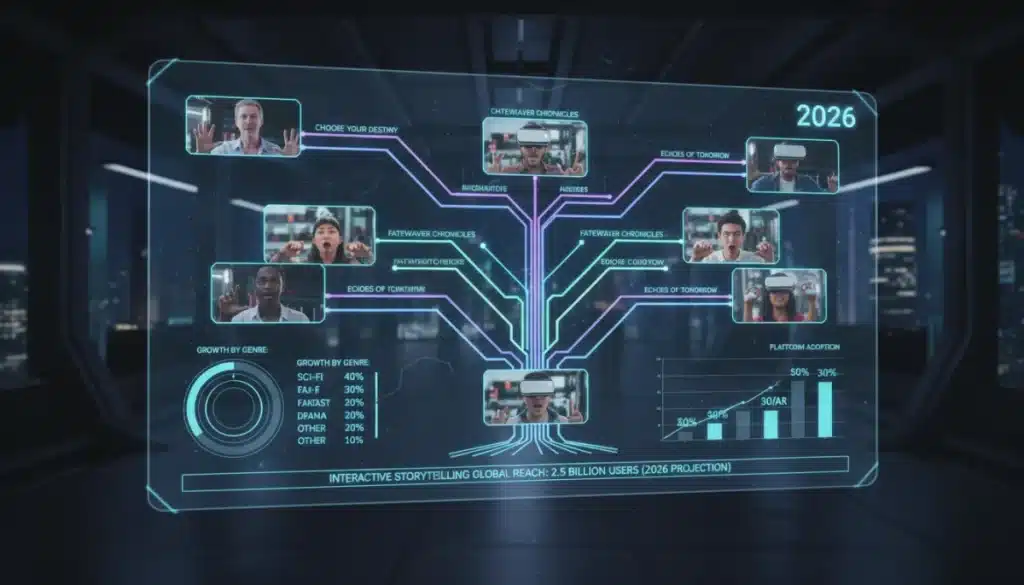
Imagine watching your favorite show, but you hold the remote control to the main character’s destiny. This is no longer a futuristic gimmick, Interactive Narratives have officially become the new battleground for audience attention, redefining how we consume digital media.
As we move through 2026, major US studios are pouring massive capital into these choice-driven experiences. Passive viewing is fading fast, replaced by a demanding new wave of audiences who expect agency, immersion, and a direct hand in shaping the plot.
This strategic surge in responsive storytelling is permanently rewriting the entertainment playbook. From streaming giants to gaming crossovers, we explore the massive investments and shifting consumer habits driving this creative revolution.
The Shifting Landscape of Storytelling and Audience Demands
The traditional linear narrative, while still dominant, is increasingly challenged by a generation of viewers who have grown up with control at their fingertips.
From video games to choose-your-own-adventure books, the desire for personalized and participatory experiences has been steadily building. This demand is now reaching a critical mass within mainstream media.
Audiences today expect more than just compelling plots; they seek immersion, agency, and a sense of personal connection to the content.
This psychological shift is a primary catalyst for the burgeoning interest in interactive narratives 2026, as creators strive to meet these evolving expectations.
The technological advancements in streaming platforms, virtual reality, and artificial intelligence are also enabling more sophisticated and seamless interactive experiences.
These tools empower creators to design complex branching storylines and dynamic character interactions that were once confined to the realm of science fiction.
US Studio Investment Boom in Interactive Narratives
Major US studios are recognizing the immense potential of interactive narratives and are funneling significant resources into this burgeoning sector.
This financial commitment signals a long-term strategic pivot, moving beyond experimental projects to integrate interactivity into core content pipelines. The goal is to capture new audiences and retain existing ones in an increasingly competitive market.
These investments span a wide array of formats, from feature-length interactive films on major streaming platforms to episodic series where viewer choices directly influence the plot.
Studios are also investing in research and development to push the boundaries of what is technically possible in interactive storytelling. This includes exploring advanced AI for dynamic character responses and sophisticated real-time rendering engines.
The financial figures underscore the gravity of this shift. Industry reports indicate a substantial increase in budget allocation for interactive projects, with some studios dedicating over 20% of their content development funds to this area.
This trend is expected to accelerate, solidifying the market position of interactive narratives 2026.
Strategic Acquisitions and Partnerships Driving Innovation
Many US studios are not just building internal interactive capabilities; they are actively acquiring smaller, specialized interactive media companies and forming strategic partnerships.
This strategy allows them to quickly integrate expertise and intellectual property developed by pioneers in the field. These collaborations often involve gaming studios, VR/AR developers, and tech firms specializing in AI-driven narrative systems.
These strategic moves are designed to diversify content portfolios and to gain a competitive edge in the rapidly evolving interactive landscape.
By combining established storytelling prowess with cutting-edge technological innovation, studios aim to create groundbreaking experiences that redefine entertainment. This approach is crucial for mastering interactive narratives 2026.
- Netflix‘s continued expansion into interactive specials for both kids and adults, leveraging its vast subscriber base.
- Disney’s exploration of immersive storytelling experiences within its theme parks and digital platforms, blurring the lines between physical and virtual.
- Warner Bros. Discovery’s investments in gaming divisions that often feature narrative choices and player agency, influencing future film and TV adaptations.
- Amazon Prime Video’s selective funding of interactive pilots and series, testing audience reception for various formats.
Evolving Viewer Engagement Trends Towards 2026
The way audiences engage with content is undergoing a profound transformation, driven by the rise of interactive narratives. Viewers are no longer passive recipients; they are becoming active participants, shaping storylines and influencing outcomes.
This shift demands a deeper level of cognitive and emotional investment, leading to more memorable and impactful experiences.
Data analytics play a crucial role in understanding these new engagement patterns. Studios are meticulously tracking viewer choices, re-watch rates for different narrative paths, and feedback on interactive elements.
This data provides invaluable insights into what resonates with audiences and informs future content development strategies, refining the approach to interactive narratives 2026.
The appeal of agency extends beyond simple plot choices; it includes customizing characters, influencing character relationships, and even solving puzzles embedded within the narrative.
This multi-faceted engagement fosters a sense of ownership and personal connection that traditional media often struggles to achieve.
The Appeal of Agency and Personalization
The core allure of interactive narratives lies in the power of choice and personalization. Viewers appreciate the ability to influence the story’s direction, making each viewing experience unique.
This bespoke quality increases replayability and encourages discussions among audiences about their individual narrative journeys. Personalization fosters a deeper connection between the audience and the content, making them feel invested in the outcome.
This personalized experience transcends simple multiple-choice options, evolving into more nuanced systems where character interactions, dialogue choices, and even emotional responses can steer the narrative.
The sophistication of these systems is a key area of development for interactive narratives 2026, aiming for truly adaptive storytelling. This leads to higher satisfaction and loyalty among viewers.
Technological Innovations Fueling Interactive Growth
The rapid advancements in technology are undeniably a cornerstone of the interactive narratives boom. High-speed internet, sophisticated streaming infrastructure, and the proliferation of smart devices have made complex interactive experiences accessible to a mass audience.
These technological leaps are not just about delivery; they are about enabling new forms of storytelling that were previously unimaginable.
Virtual Reality (VR) and Augmented Reality (AR) are poised to play an increasingly significant role, offering truly immersive and participatory narratives.
While still niche, the ongoing development in these areas promises to unlock new dimensions of interactive engagement. This integration of cutting-edge tech will define interactive narratives 2026.
Furthermore, Artificial Intelligence (AI) is becoming a powerful tool for creating dynamic and adaptive narratives. AI-driven systems can respond to viewer choices in real-time, generate personalized dialogue, and even evolve character personalities based on audience input.
This level of responsiveness elevates the interactive experience from simple branching paths to genuinely adaptive storytelling.
Challenges and Opportunities for Content Creators
While the opportunities in interactive narratives are vast, content creators face unique challenges. Crafting compelling stories with multiple pathways requires a different approach to writing, directing, and production.
The complexity of managing numerous narrative branches and ensuring narrative coherence across all possible outcomes demands innovative production workflows and specialized talent.
Funding models for interactive content are also evolving. Traditional financing structures often struggle to accommodate the variable costs and uncertain revenue streams associated with interactive projects.
However, the potential for higher viewer retention and unique monetization strategies presents new opportunities for content creators. This dynamic environment shapes the future of interactive narratives 2026.
Despite these hurdles, the creative freedom offered by interactive storytelling is attracting a new generation of filmmakers and game designers.
The ability to empower audiences and create truly unique experiences is a powerful draw, fostering a vibrant ecosystem of innovation. This creative surge is vital for the sustained growth of the interactive content space.
Navigating Production Complexities and Budgeting
Producing interactive narratives is inherently more complex than linear storytelling. Every choice point introduces new branches, requiring additional writing, shooting, and editing. This exponential growth in content can quickly inflate budgets and extend production timelines.
Studios are investing in specialized software and methodologies to manage this complexity efficiently.
They are also exploring modular content creation to streamline the process, creating reusable assets and narrative segments that can be reconfigured based on viewer choices. This focus on efficiency is critical for scaling interactive narratives 2026.
- Developing robust narrative design tools that can map out complex branching storylines.
- Investing in specialized interactive directors and writers who understand the nuances of non-linear storytelling.
- Utilizing advanced data analytics to predict optimal narrative paths and resource allocation.

Monetization Strategies and Revenue Models for 2026
The financial success of interactive narratives hinges on innovative monetization strategies. Beyond traditional subscription models, studios are exploring various avenues to generate revenue and ensure the profitability of these complex productions.
This includes tiered access, in-experience purchases, and expanded licensing opportunities. The diverse nature of interactive content allows for flexible monetization approaches.
Premium interactive experiences, for example, might be offered as an add-on to existing streaming subscriptions or as standalone purchases.
The potential for microtransactions within certain interactive formats, such as cosmetic customizations or additional narrative branches, is also being explored. These new models are essential for the long-term viability of interactive narratives 2026.
Furthermore, the data generated from viewer choices within interactive narratives holds significant value. This anonymized data can inform future content development, marketing strategies, and even cross-promotional opportunities with other brands.
The ability to understand audience preferences at such a granular level provides a powerful competitive advantage.
The Impact on Traditional Media and Future Outlook
The rise of interactive narratives is not necessarily a threat to traditional linear media but rather an expansion of the entertainment landscape. It challenges established norms and encourages innovation across the board.
Linear storytelling will continue to thrive, but it will increasingly exist alongside and potentially integrate with interactive elements, creating a richer and more diverse media ecosystem.
The future outlook for interactive narratives 2026 is one of continued growth and evolution. As technology advances and creators become more adept at harnessing its potential, the experiences offered will become increasingly sophisticated and immersive.
This ongoing innovation promises a dynamic and engaging future for audiences worldwide.
The influence of interactive narratives will also extend beyond entertainment, impacting fields such as education, training, and marketing.
The ability to create personalized and engaging learning experiences, for example, offers immense potential for educational institutions and corporate training programs. This broad applicability underscores the transformative power of interactive storytelling.
| Key Trend | Impact on Industry |
|---|---|
| Increased Studio Investment | Significant capital allocation towards diverse interactive projects. |
| Evolving Viewer Expectations | Demand for agency, personalization, and deeper immersion in narratives. |
| Technological Advancements | VR, AI, and streaming tech enabling complex interactive experiences. |
| New Revenue Models | Subscription tiers, in-experience purchases, and expanded licensing opportunities. |
FAQ: Understanding Interactive Narratives in 2026
Interactive narratives are stories where the audience actively participates in shaping the plot, character decisions, or overall experience. Unlike passive viewing, viewers make choices that influence the narrative’s progression, leading to multiple possible outcomes or personalized journeys. This engagement drives the appeal of interactive narratives 2026.
US studios are investing due to shifting audience demands for agency and personalization, seeking to increase engagement and retention. They aim to capture new market segments and diversify content offerings in a competitive landscape, leveraging technological advancements to create innovative experiences. This investment signals a major strategic shift for interactive narratives 2026.
Interactive content transforms viewers from passive observers into active participants. This fosters deeper emotional and cognitive investment, increasing replayability and fostering a sense of ownership over the story. Data from these interactions provides valuable insights into audience preferences, refining the development of interactive narratives 2026.
Key technologies include advanced streaming infrastructure, virtual and augmented reality for immersive experiences, and artificial intelligence for dynamic, adaptive storytelling. These innovations allow for complex branching narratives and real-time responses to viewer choices, pushing the boundaries of what’s possible in interactive narratives 2026.
Creators face challenges in managing narrative complexity, ensuring coherence across multiple paths, and developing new production workflows. Budgeting can also be more intricate due to variable content needs. However, the creative freedom and potential for unique engagement make these challenges worthwhile for interactive narratives 2026.
Looking Ahead
The trajectory of interactive narratives 2026 indicates a dynamic and evolving sector within digital entertainment.
US studio investments are not merely speculative; they represent a calculated response to fundamental shifts in viewer behavior and technological capabilities.
The ongoing integration of AI, VR, and sophisticated narrative design will undoubtedly reshape how we consume stories.
Maintaining vigilance on new releases and technological breakthroughs will be key to understanding the full impact of this transformative trend on the entertainment landscape.
