Top 5 PC Gaming Monitor Upgrades 2026: US Data Comparison
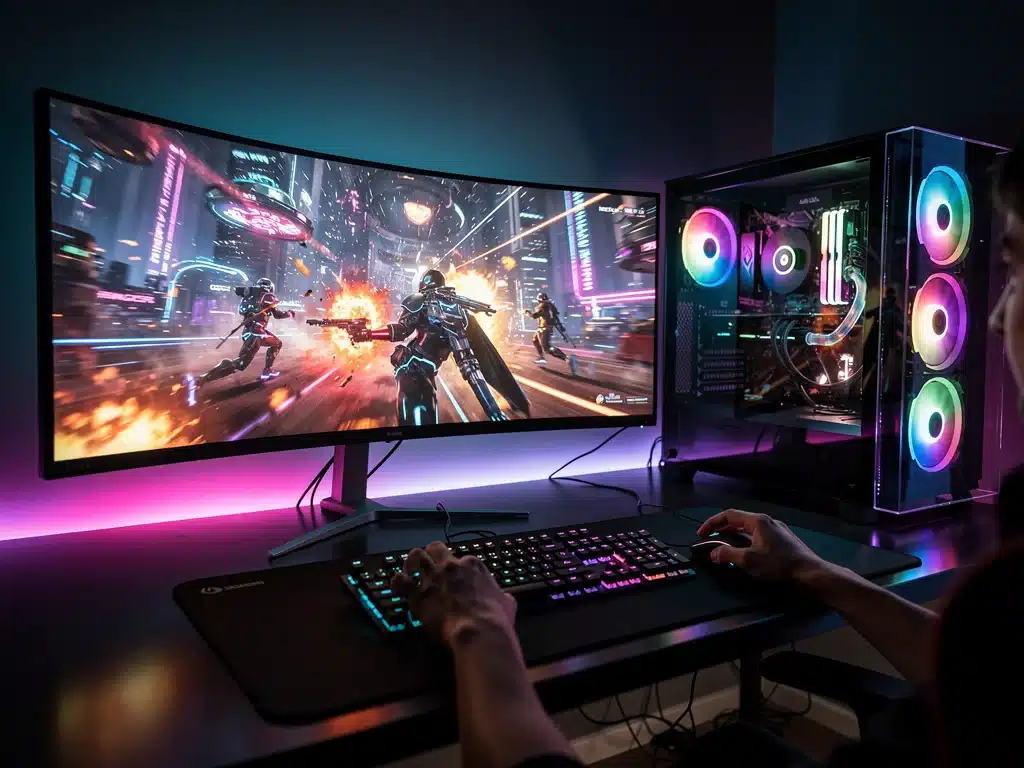
Upgrading your setup with targeted PC Gaming Monitor Upgrades in 2026 is no longer just about chasing higher frame rates—it is about redefining visual fidelity.
Across the US market, players are trading legacy LCD panels for next-generation Tandem WOLED and Gen-5 QD-OLED displays that offer ultra-low response times and record-breaking motion clarity.
Strategic advancements in dual-mode refresh rates, DisplayPort 2.1 bandwidth, and enhanced pixel layouts are establishing a new baseline for fluid gameplay and competitive advantage.
By leveraging latest US sales metrics and technical benchmarks, this comparison isolates the top five display investments delivering maximum impact for every budget and playstyle.
The Evolving Landscape of PC Gaming Monitor Upgrades
The monitor market is experiencing unprecedented innovation, driven by consumer demand for higher fidelity and more responsive gaming experiences. Technologies once considered niche are now becoming mainstream, redefining expectations for display performance.
This rapid evolution means that a monitor purchased today might quickly become outdated in terms of features and capabilities. Therefore, looking ahead to 2026 provides a critical perspective on future-proofing your gaming setup and making wise investments.
For US gamers, understanding these shifts is vital, as regional pricing, availability, and warranty support can significantly influence purchasing decisions. Our data-driven comparison considers these factors to offer actionable insights.
Key Technologies Driving 2026 Monitor Innovations
Several technological advancements are at the forefront of the next generation of PC gaming monitors. These innovations collectively contribute to a more immersive, responsive, and visually stunning gaming experience, pushing the boundaries of what displays can achieve.
From panel types to refresh rate synchronization, each technology plays a crucial role in enhancing different aspects of gameplay. Gamers must consider how these features align with their specific needs and preferred genres.
Understanding these core technologies is the first step in making informed decisions about PC gaming monitor upgrades. This section breaks down the most impactful innovations arriving by 2026.
OLED and QD-OLED Dominance
OLED and QD-OLED panels are poised to become the gold standard for high-end gaming monitors by 2026, offering unparalleled contrast ratios, true blacks, and instantaneous response times.
Their self-emissive pixels eliminate backlight bleed and halo effects, providing a visual fidelity unmatched by traditional LCD technologies.
For competitive gamers, the near-instantaneous pixel response of OLED and QD-OLED translates into virtually no ghosting or motion blur, offering a distinct advantage.
The vibrant color reproduction and wide viewing angles also significantly enhance immersion in graphically intensive titles.
While historically premium, manufacturing efficiencies are expected to make these technologies more accessible, solidifying their position as top contenders for future PC gaming monitor upgrades. This accessibility will drive broader adoption among US gamers.
- Superior Contrast: Infinite contrast ratios for perfect blacks.
- Instant Response: Near 0.03ms GtG response times for blur-free motion.
- Vibrant Colors: Exceptional color accuracy and wide color gamut.
- Wide Viewing Angles: Consistent image quality from any perspective.
Ultra-High Refresh Rates and Resolutions
The pursuit of higher refresh rates continues, with 360Hz becoming more common and 500Hz+ displays emerging for competitive esports.
Coupled with increasing resolutions like 4K and even 8K, these monitors demand powerful GPUs but deliver an incredibly detailed and fluid visual experience.
Balancing refresh rate with resolution is key; while 4K at 144Hz is a sweet spot for many, competitive players might prioritize 1440p at 360Hz or higher. The market is diversifying to cater to both camps, ensuring options for every preference.
Adaptive Sync technologies like NVIDIA G-Sync and AMD FreeSync will remain crucial for eliminating screen tearing and stuttering, ensuring smooth gameplay across varying frame rates.
These features are essential for maximizing the benefits of high refresh rate PC gaming monitor upgrades.
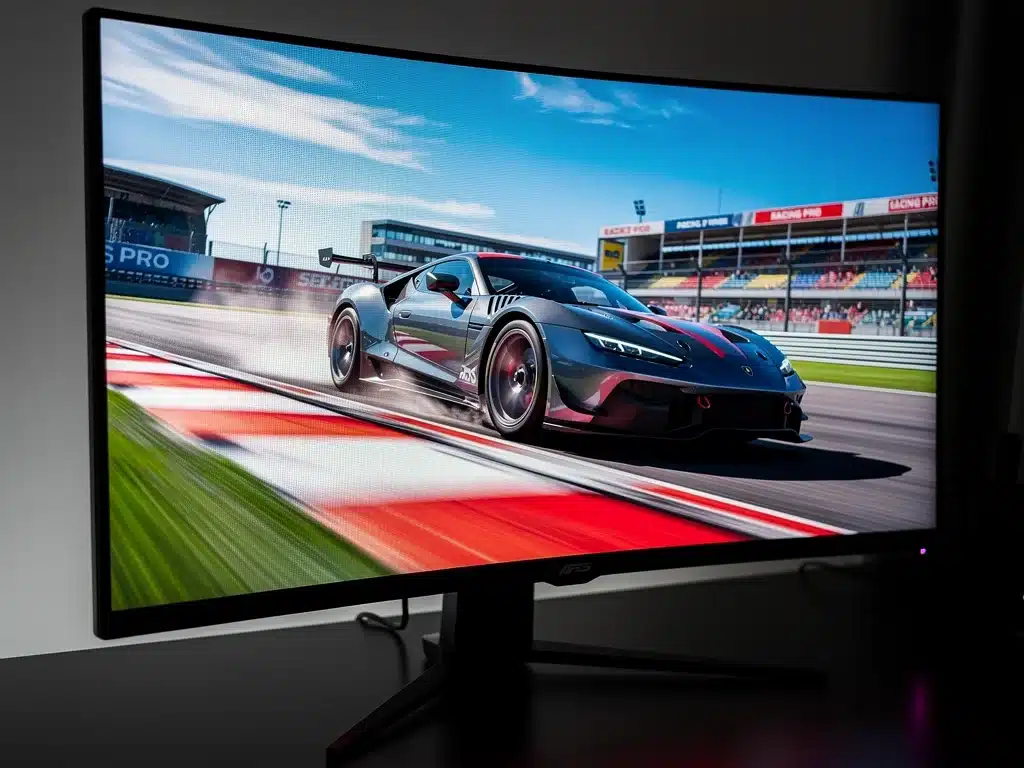
Top 5 PC Gaming Monitor Upgrades for 2026: A Data-Driven Comparison
Our data-driven analysis identifies five categories of monitors that will represent the pinnacle of PC gaming monitor upgrades in 2026. Each category caters to different priorities, from ultra-competitive esports to immersive cinematic experiences.
This comparison focuses on key metrics such as panel type, resolution, refresh rate, response time, HDR performance, connectivity options, and overall value. We leverage market trends, anticipated technology maturation, and expert reviews to project their standing.
For US gamers, understanding these distinct offerings will be crucial in making an informed decision that aligns with their specific gaming habits and budget. This section outlines the leading contenders.
1. The Esports Champion: Ultra-High Refresh Rate OLED
These monitors will combine the instantaneous response times of OLED with refresh rates exceeding 360Hz, possibly reaching 500Hz. Designed for professional and aspiring esports players, they prioritize speed and clarity above all else, ensuring every millisecond counts.
Expect resolutions to primarily remain at 1080p or 1440p to maximize frame rates, paired with advanced features like NVIDIA Reflex Latency Analyzer integration. Data suggests these will be the go-to for competitive titles where victory hinges on reaction time.
While the price point will likely remain premium, the performance gains for competitive play will justify the investment for serious gamers. These represent the ultimate in low-latency PC gaming monitor upgrades.
- Target Audience: Professional and competitive esports players.
- Key Features: >360Hz OLED, <0.03ms GtG, 1080p/1440p.
- Anticipated Price: High-end premium.
2. The Immersive Powerhouse: QD-OLED Ultrawide 4K
For gamers seeking the most immersive visual experience, QD-OLED ultrawide monitors at 4K resolution will be a standout. These displays offer a vast field of view, stunning HDR performance, and the deep blacks characteristic of OLED, making single-player adventures truly cinematic.
With refresh rates typically around 144Hz to 240Hz, they strike an excellent balance between fluidity and graphical fidelity. The QD-OLED technology provides brighter highlights and more vibrant colors than traditional OLED, enhancing the HDR experience significantly.
These monitors are ideal for RPGs, open-world games, and simulations, where panoramic views and visual splendor are paramount. They offer a premium, all-encompassing experience among PC gaming monitor upgrades.
- Target Audience: Immersive single-player and cinematic gamers.
- Key Features: 4K QD-OLED Ultrawide, 144-240Hz, superb HDR.
- Anticipated Price: Premium.
3. The Versatile Performer: Mini-LED 4K/240Hz
Mini-LED technology will continue to mature, offering an excellent alternative to OLED for those concerned about burn-in or seeking extreme brightness.
These 4K 240Hz displays will provide exceptional HDR performance with thousands of local dimming zones, rivaling OLED in many aspects.
Their versatility makes them suitable for both competitive gaming and content creation, offering high refresh rates for fast action and superior color accuracy for professional work. Mini-LED provides a robust and bright image, making it a strong contender.
This category represents a balanced choice for gamers who demand top-tier performance across various applications without the absolute premium of QD-OLED. It’s a compelling option for flexible PC gaming monitor upgrades.
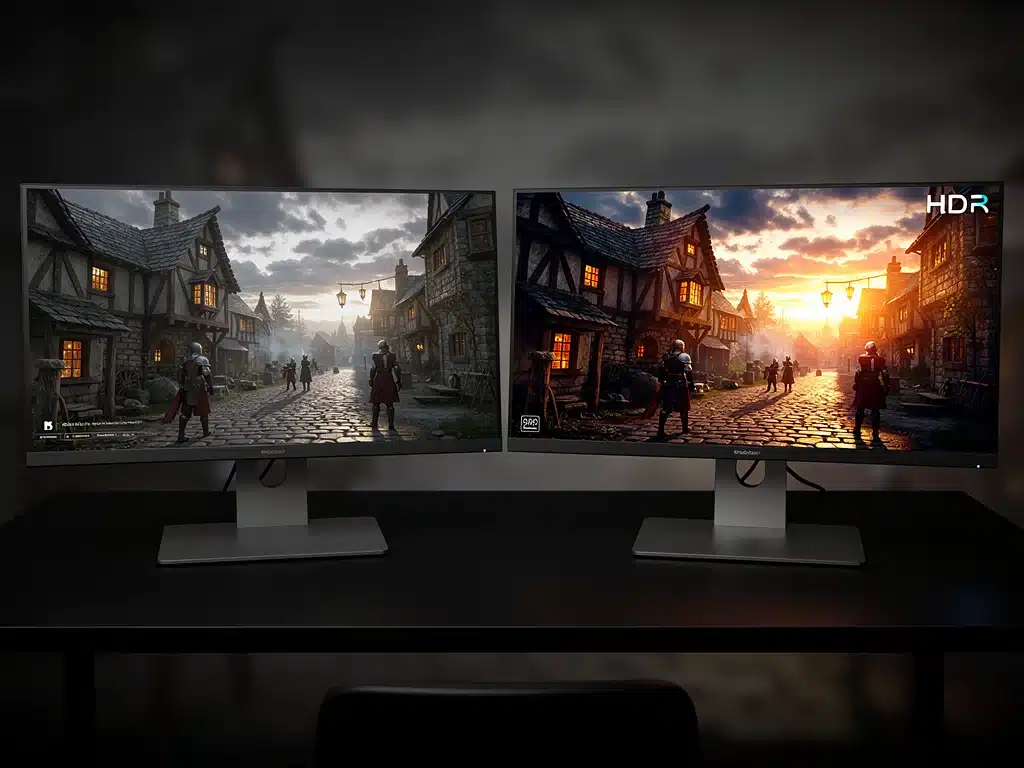
Connectivity and Ergonomics in Future Displays
Beyond panel technology, the connectivity options and ergonomic design of monitors will remain critical factors for gamers. The move towards USB-C for single-cable solutions and DisplayPort 2.1 for uncompressed high-bandwidth video signals will be prominent.
Ergonomics, including height adjustment, tilt, swivel, and pivot, ensure comfortable long gaming sessions, reducing strain. Integrated KVM switches will also gain popularity for users managing multiple systems with a single peripheral set.
These features, while sometimes overlooked, contribute significantly to the overall user experience and setup flexibility. They are an integral part of comprehensive PC gaming monitor upgrades.
The Role of DisplayPort 2.1 and USB-C
DisplayPort 2.1 will be essential for transmitting the immense data required by 4K and 8K resolutions at ultra-high refresh rates, ensuring uncompressed video quality. Its higher bandwidth capability future-proofs monitors for upcoming graphical demands.
USB-C with power delivery and DisplayPort Alt Mode simplifies cable management, allowing a single cable to handle video, data, and charging for compatible devices. This integration creates cleaner, more efficient desk setups.
The combination of these two standards will streamline connectivity, reducing clutter and enhancing user convenience.
Gamers upgrading their systems should prioritize monitors featuring these advanced ports for optimal future compatibility and ease of use, especially for PC gaming monitor upgrades.
- DisplayPort 2.1: Enables uncompressed 4K >240Hz and 8K >120Hz.
- USB-C Integration: Single-cable solution for video, data, and power.
- KVM Switches: Seamlessly switch between multiple PCs.
Value and Investment for US Gamers in 2026
Investing in a new gaming monitor is a significant decision, and by 2026, the market will offer a wide spectrum of price points and performance levels. Understanding the value proposition of each technology is paramount for US gamers.
While cutting-edge displays will command premium prices, increased competition and manufacturing efficiencies will drive down the cost of technologies that are currently considered high-end. This makes advanced features more accessible.
Our data-driven comparison emphasizes not just raw performance but also the longevity and feature set relative to cost, ensuring gamers make a smart investment. This approach guides effective PC gaming monitor upgrades.
Anticipated Price Trends and Market Accessibility
OLED and QD-OLED monitors, while still premium, are expected to see price reductions, making them more attainable for a broader audience. Mini-LED will likely settle into a strong mid-to-high-range segment, offering excellent performance without the top-tier cost.
Entry-level high refresh rate IPS and VA panels will continue to provide strong value for budget-conscious gamers, albeit without the absolute best contrast or response times. The diversity in pricing will cater to all segments of the US gaming market.
Gamers should track sales events and new product launches closely, as competitive pricing can offer significant savings. Strategic timing for PC gaming monitor upgrades can maximize value.
Future-Proofing Your Gaming Setup with Smart Upgrades
Making a monitor upgrade in 2026 involves more than just picking the highest numbers; it requires a strategic approach to future-proof your entire gaming ecosystem.
Consider your current and planned PC hardware, especially your GPU, as it dictates what resolutions and refresh rates you can realistically drive.
Compatibility with upcoming technologies, such as new console generations or evolving PC standards, should also influence your choice. A monitor purchased now should ideally serve you well for the next 3-5 years, adapting to new games and hardware.
Ultimately, the best PC gaming monitor upgrades will be those that align with your personal gaming style, budget, and long-term technological aspirations. Our data-driven comparison provides the framework for this informed decision-making process.
| Key Upgrade Area | Impact for US Gamers |
|---|---|
| OLED/QD-OLED Panels | Unmatched contrast, true blacks, and instant response times for superior visuals and competitive edge. |
| Ultra-High Refresh Rates | Smoother motion, reduced input lag, and improved reaction times for competitive and fast-paced games. |
| 4K & Higher Resolutions | Incredibly sharp images and greater detail, enhancing immersion in graphically rich titles. |
| Advanced Connectivity | Streamlined setup with DisplayPort 2.1 and USB-C, ensuring future compatibility and convenience. |
Frequently Asked Questions About 2026 PC Gaming Monitors
The most significant advancement will be the widespread adoption and increased affordability of OLED and QD-OLED panels, combined with ultra-high refresh rates. This blend offers superior image quality and responsiveness, setting a new benchmark for gaming displays. It will redefine expectations for immersive and competitive play.
Waiting until 2026 could provide access to more mature and affordable OLED/QD-OLED technologies and higher refresh rates. However, if your current monitor is significantly hindering your gaming experience, consider current excellent options. The best time depends on your immediate needs and budget for PC gaming monitor upgrades.
HDR will be critically important for gaming monitors in 2026, offering vastly improved contrast, brightness, and color vibrancy. With more games supporting HDR, a capable monitor significantly enhances visual immersion. OLED and Mini-LED technologies will lead in delivering exceptional HDR performance for these PC gaming monitor upgrades.
For competitive US gamers, a 1440p resolution paired with a refresh rate of 240Hz or higher will likely be optimal in 2026. This combination offers a sharp image and incredibly fluid motion, crucial for reaction-based games. Esports-focused OLEDs might push refresh rates even higher, but 1440p remains a strong balance.
While 8K gaming monitors will be available, they are unlikely to be viable for most US gamers by 2026 due to extreme hardware demands and high cost. Driving 8K at playable frame rates requires top-tier GPUs, making it a niche luxury. 4K will remain the high-end standard for general PC gaming monitor upgrades.
Looking Ahead: The Future of Gaming Displays
The trajectory of PC gaming monitor upgrades towards 2026 indicates a future where visual fidelity and responsiveness reach unprecedented levels. Gamers can anticipate a highly competitive market offering advanced display technologies at increasingly accessible price points.
Staying informed on these trends will empower US gamers to make strategic investments that profoundly enhance their gaming experiences for years to come. The emphasis on OLED, high refresh rates, and improved connectivity will define the next era of display innovation.
