Global Reach, Local Content: US Entertainment Adapts for 2026
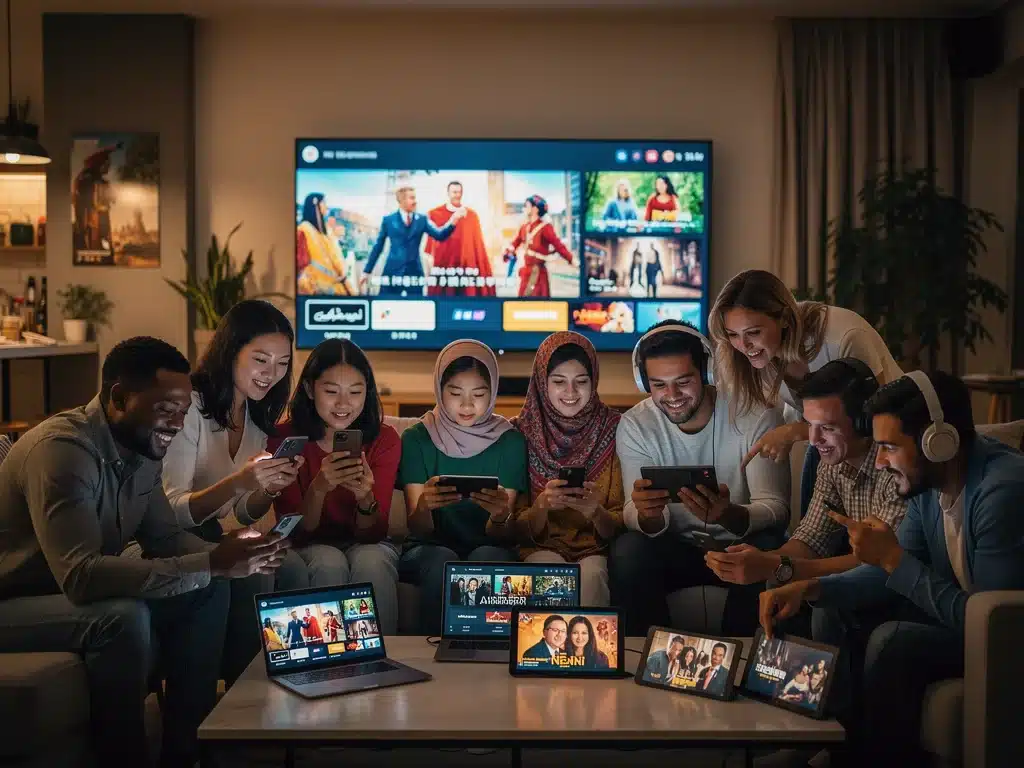
What if the key to capturing a global audience in 2026 isn’t a massive Hollywood budget, but a deep respect for local cultural nuances? Implementing a flawless US Entertainment Global Strategy has shifted from simply exporting American blockbusters to curating native-feeling experiences worldwide.
This modern approach to worldwide broadcasting moves far beyond traditional subtitling or dubbing pipelines.
Top streaming platforms and major studios are now engineering their content lifecycles to embed regional authenticity right into the script, localizing everything from user interfaces to native character arcs.
Staying ahead in this fiercely competitive media landscape requires understanding how these cross-border corporate shifts impact view preferences.
This guide explores how international storytelling partnerships and culturally calibrated campaigns are redefining true entertainment value for modern audiences.
The Shifting Paradigm of Global Content
The traditional model of exporting US-centric content globally is rapidly being replaced by a more nuanced approach. US entertainment companies are recognizing that cultural specificity and local storytelling are paramount for capturing and retaining international viewers.
This paradigm shift is driven by increased competition from local productions and the growing demand from audiences for content that authentically reflects their experiences.
The focus has moved from merely distributing content to actively co-producing and developing it within target markets.
The goal is to create content that not only entertains but also resonates deeply with the cultural fabric of each region. This strategy ensures that US entertainment companies remain competitive and relevant in a highly fragmented global market.
Embracing Localized Production Hubs
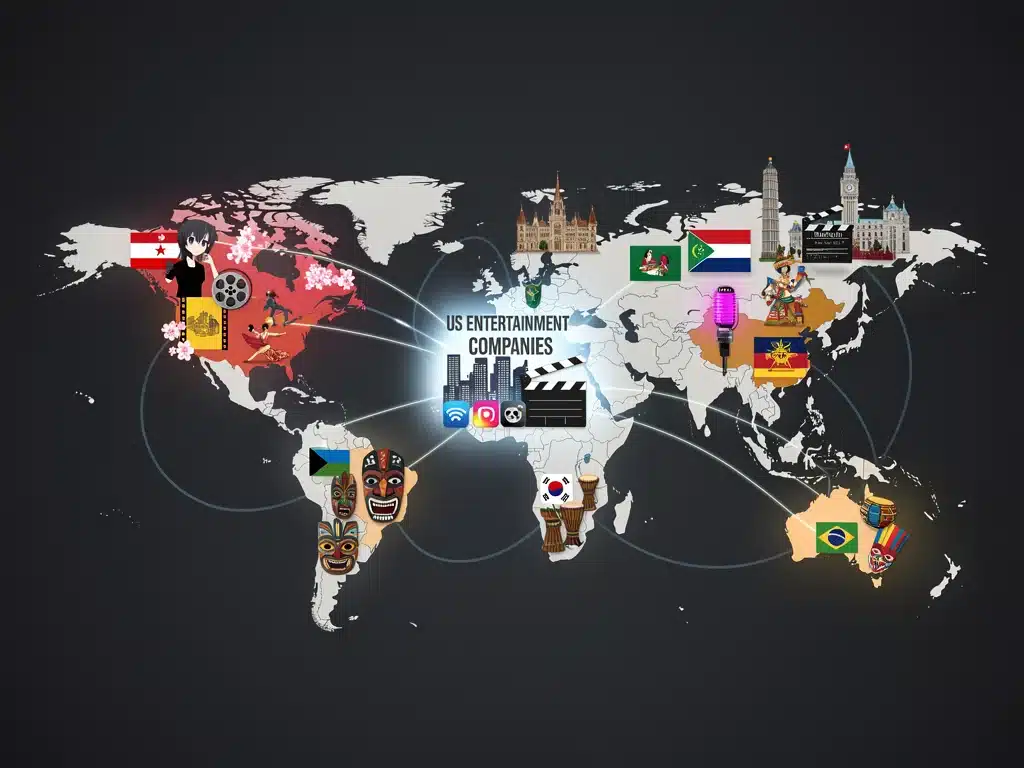
Many US entertainment companies are now establishing localized production hubs in key international markets. These hubs are instrumental in fostering collaborations with local talent, writers, and directors, leading to more authentic and culturally relevant content.
This approach allows for a deeper understanding of local tastes and narratives, which is crucial for successful market penetration. By empowering local creators, these companies can produce content that genuinely speaks to the target audience, enhancing its appeal.
The investment in these hubs signifies a long-term commitment to international markets, moving beyond simply licensing existing US content. It’s a fundamental change in how the US Entertainment Global Strategy operates, prioritizing local expertise.
- Increased investment in regional production studios and partnerships.
- Recruitment of local writers, directors, and actors to lead projects.
- Development of original content tailored to specific cultural contexts.
Data-Driven Localization and Audience Insights
Recent data helps clarify the scope and sequence of events. Markets and local communities reacted as information became public, with agencies coordinating responses under established protocols.
The success of a robust US Entertainment Global Strategy in 2026 hinges on sophisticated data analytics and audience insights. Companies are leveraging big data to understand viewing habits, genre preferences, and cultural sensitivities across different international markets.
This meticulous analysis informs content development, marketing strategies, and distribution channels, ensuring that investments are precisely targeted. It’s no longer enough to guess what international audiences want; data provides the actionable intelligence needed for effective localization.
Understanding these granular details allows US entertainment companies to tailor everything from plotlines to character development, making content feel genuinely local. This data-driven approach minimizes risks and maximizes the potential for global success.
The Role of AI in Content Adaptation
Artificial intelligence (AI) is playing an increasingly vital role in streamlining the content adaptation process. AI algorithms can analyze vast amounts of data to identify cultural trends, language nuances, and audience preferences, accelerating localization efforts.
From automating subtitling and dubbing to suggesting culturally appropriate visual elements, AI tools enhance efficiency and accuracy. This technological integration is a cornerstone of the modern US Entertainment Global Strategy, enabling rapid content deployment.
AI also assists in predicting content performance in different regions, allowing companies to make informed decisions about which projects to greenlight. This predictive capability is invaluable for navigating the complexities of international markets.
- AI-powered tools for efficient language localization and cultural adaptation.
- Predictive analytics for assessing content appeal in various regions.
- Automated content tagging and metadata optimization for discoverability.
Navigating Regulatory and Censorship Landscapes
The topic’s background connects the update to previous milestones. Analysts highlight short-term signals that deserve attention before broader trends become clear.
One of the most significant challenges for US entertainment companies expanding globally is navigating diverse regulatory and censorship landscapes. Each country presents its own set of rules regarding content appropriateness, political sensitivities, and cultural norms.
To successfully implement a US Entertainment Global Strategy, companies must invest in legal and cultural expertise to ensure compliance. This often involves making strategic edits or adaptations to content to meet local standards without compromising artistic integrity.
Failure to adhere to these regulations can lead to significant financial penalties, content bans, and reputational damage. Therefore, proactive engagement with local authorities and cultural advisors is indispensable for smooth international operations.
Building Trust Through Cultural Sensitivity
Building trust with international audiences requires more than just compliant content; it demands genuine cultural sensitivity. US entertainment companies are increasingly aware of the importance of avoiding cultural appropriation and misrepresentation.
This involves rigorous vetting processes for localized content and a commitment to authentic representation of diverse cultures. Collaborating with local cultural consultants helps ensure that stories are told respectfully and accurately, fostering goodwill.
The emphasis on cultural sensitivity reinforces the overarching goal of the US Entertainment Global Strategy to connect with audiences on a deeper, more meaningful level. This commitment is vital for long-term success and audience loyalty.
For now, practical effects are concentrated in specific areas, while broader impacts depend on future decisions and compliance with new guidelines.
The Rise of Hyper-Localization and Micro-Trends
Direct quotes and attributed summaries show positions, responsibilities and next steps. Independent experts assess the credibility of the information and likely outcome scenarios.
Beyond broad regional localization, US entertainment companies are delving into hyper-localization, targeting specific sub-cultures and micro-trends within larger markets. This granular approach acknowledges the vast diversity even within a single country or linguistic group.
This strategy allows for the creation of content that speaks to very specific audience segments, fostering a strong sense of connection and exclusivity. It’s about recognizing that a ‘local’ audience is rarely monolithic and often comprises numerous distinct communities with unique preferences.
Hyper-localization is a testament to the advanced analytical capabilities now available, permitting a level of precision previously unattainable. This refined US Entertainment Global Strategy is setting new benchmarks for audience engagement.
This approach involves detailed demographic and psychographic profiling to identify niche markets. Content is then developed or adapted to cater directly to these specific groups, from regional dialects to localized humor and references.
Community Engagement and Local Partnerships
Engaging directly with local communities and forming strategic partnerships are crucial for successful hyper-localization. This includes collaborating with local influencers, community leaders, and grassroots organizations to promote content and gather feedback.
Such partnerships provide invaluable insights into community needs and preferences, ensuring content resonates authentically. They also help in building a strong local presence and fostering a sense of shared ownership over the entertainment offerings.
This direct engagement is essential for refining the US Entertainment Global Strategy, making it more responsive and adaptable to the dynamic nature of local cultures. It’s about becoming part of the community, not just a content provider.
- Collaborating with local digital creators and influencers.
- Sponsoring local events and cultural initiatives.
- Establishing feedback loops with target communities for content refinement.
Financial Implications and Investment in Global Growth
The strategic shift towards localized content requires substantial financial investment from US entertainment companies. This includes funding for local production, talent acquisition, technological infrastructure, and extensive market research.
While the initial outlay can be considerable, the long-term returns in terms of audience loyalty, market share, and revenue growth are proving to be significant. This investment is viewed as essential for sustaining a competitive edge in the global entertainment arena.
Shareholders and investors are increasingly looking for robust international growth strategies, making localization a key indicator of a company’s future potential. The financial commitment underscores the seriousness of this strategic pivot for the US Entertainment Global Strategy.
Measuring ROI in Localized Content
Measuring the return on investment (ROI) for localized content presents unique challenges. Metrics extend beyond traditional viewership numbers to include audience engagement, brand perception, and cultural impact within specific markets.
Companies are developing sophisticated analytical frameworks to assess the effectiveness of their localization efforts. This includes tracking sentiment analysis, social media engagement, and subscription growth in targeted regions.
Understanding these diverse ROI indicators is crucial for refining the US Entertainment Global Strategy and ensuring that resources are allocated efficiently. It’s about demonstrating tangible value from cultural investment.
Technological Advancements Driving Localization
Technological advancements are serving as powerful enablers for US entertainment companies in their pursuit of localized content strategies. From advanced streaming platforms to sophisticated AI-driven tools, technology is making global reach with local content more feasible than ever.
High-speed internet infrastructure and cloud computing facilitate seamless content delivery and collaboration across international borders. These technological foundations are critical for the efficient execution of a multifaceted US Entertainment Global Strategy.
The continuous evolution of digital tools allows for rapid adaptation and distribution of content, meeting the diverse demands of international viewers. This technological edge is a significant competitive advantage for companies that leverage it effectively.
Enhanced Streaming Platforms
Streaming platforms are continually being enhanced to support a wide array of localized features. This includes dynamic content recommendations based on regional preferences, multi-language interfaces, and customizable viewing experiences.
These platform improvements are essential for creating a user-friendly and culturally relevant experience for international subscribers. The ability to seamlessly switch between languages and access region-specific content is a key differentiator.
The ongoing development of these platforms is central to the broader US Entertainment Global Strategy, ensuring accessibility and engagement for audiences worldwide. It’s about providing a truly global yet personalized viewing environment.
- Dynamic content recommendations tailored to regional tastes.
- Multi-language user interfaces and subtitle/dubbing options.
- Region-specific content libraries and curated collections.
Challenges and Opportunities in Emerging Markets
Emerging markets represent both significant challenges and immense opportunities for US entertainment companies. While these markets offer vast untapped audience potential, they also come with unique infrastructure, economic, and cultural considerations.
Successfully penetrating these markets requires a deep understanding of local consumption patterns, payment methods, and digital literacy levels. A flexible and adaptable US Entertainment Global Strategy is crucial for navigating these complexities.
Despite the hurdles, the long-term growth prospects in emerging markets are compelling, driving continued investment and innovation. Companies are learning to tailor their offerings to meet the specific demands and capabilities of these diverse populations.
Bridging the Digital Divide
Bridging the digital divide in emerging markets is a critical challenge. This involves developing strategies for content delivery that account for varying internet speeds, device accessibility, and affordability of data plans.
Some companies are exploring offline viewing options, lower-bandwidth content formats, and alternative payment solutions to reach broader audiences. These creative approaches are vital for expanding the reach of US Entertainment Global Strategy.
Addressing these fundamental access issues is key to unlocking the full potential of emerging markets. It requires innovative solutions that extend beyond content itself to the very infrastructure of delivery.

Future Outlook: Hyper-Personalization and Interactive Content
Looking ahead, the US Entertainment Global Strategy is poised for further evolution, with hyper-personalization and interactive content emerging as key trends.
The goal is to provide individual viewers with experiences that are not just localized but uniquely tailored to their specific tastes.
This involves advanced algorithms that learn individual preferences and recommend content with unprecedented accuracy. Interactive storytelling, where viewers can influence narratives, is also gaining traction, offering deeply immersive experiences.
These future directions promise an even more engaging and personalized global entertainment landscape. The continuous innovation in content creation and delivery will define the next phase of international expansion.
The Metaverse and Global Entertainment
The burgeoning metaverse offers a frontier for global entertainment, providing immersive and interactive experiences that transcend geographical boundaries. US entertainment companies are exploring how virtual worlds can host localized content and foster global communities.
This virtual realm could allow for new forms of storytelling and audience engagement, potentially revolutionizing the US Entertainment Global Strategy. The metaverse presents an opportunity to create shared cultural experiences on a truly global scale.
While still in its early stages, the integration of entertainment into the metaverse holds immense potential for future localization and global reach. It offers a new dimension for connecting diverse audiences through shared virtual experiences.
| Key Strategy | Description |
|---|---|
| Localized Production | Establishing hubs and collaborating with local talent for authentic content. |
| Data-Driven Insights | Using analytics and AI for content adaptation and market understanding. |
| Cultural Sensitivity | Navigating regulations and building trust through respectful content. |
| Hyper-Localization | Targeting specific sub-cultures and micro-trends within markets. |
Frequently Asked Questions About Global Entertainment Adaptation
The primary driver is intense global competition and audience demand for culturally relevant content. Localized content fosters deeper connections, increases market share, and ensures sustained engagement in diverse international markets, moving beyond generic offerings.
They establish local production hubs, collaborate with local writers and directors, and use cultural consultants. This approach ensures that content authentically reflects local customs, humor, and narratives, avoiding misrepresentation and connecting genuinely with audiences.
Technology, including AI and advanced streaming platforms, is crucial for data analysis, efficient dubbing, and dynamic content delivery. It enables hyper-personalization, streamlines localization processes, and helps in navigating diverse regulatory environments effectively.
Challenges include varying internet infrastructure, device accessibility, and diverse economic conditions. Companies must also navigate unique cultural sensitivities and regulatory frameworks, requiring flexible content delivery and payment solutions.
Hyper-personalization will lead to highly tailored viewing experiences, with content recommendations and interactive narratives unique to individual viewers. This will deepen engagement and loyalty, transforming how global audiences consume entertainment in the long term.
Looking Ahead
The evolving US Entertainment Global Strategy marks a fundamental shift towards a more nuanced and culturally informed approach to international markets.
The emphasis on localized content, driven by data and technological innovation, is not merely a trend but a strategic imperative for sustained growth.
As companies continue to invest in local production, navigate complex regulatory landscapes, and embrace hyper-personalization, the global entertainment landscape will become increasingly diverse and engaging.
This ongoing transformation promises richer storytelling and deeper connections with audiences worldwide.
Monitoring the continued development of AI-driven localization tools and the expansion into emerging markets will be crucial.
These factors will undoubtedly shape the future success and influence of US entertainment entities on the global stage, making the US Entertainment Global Strategy a dynamic area to watch.
