The Top 5 Console Gaming Trends Reshaping Player Experiences in 2026: An Insider’s Look at Hardware and Software Innovations
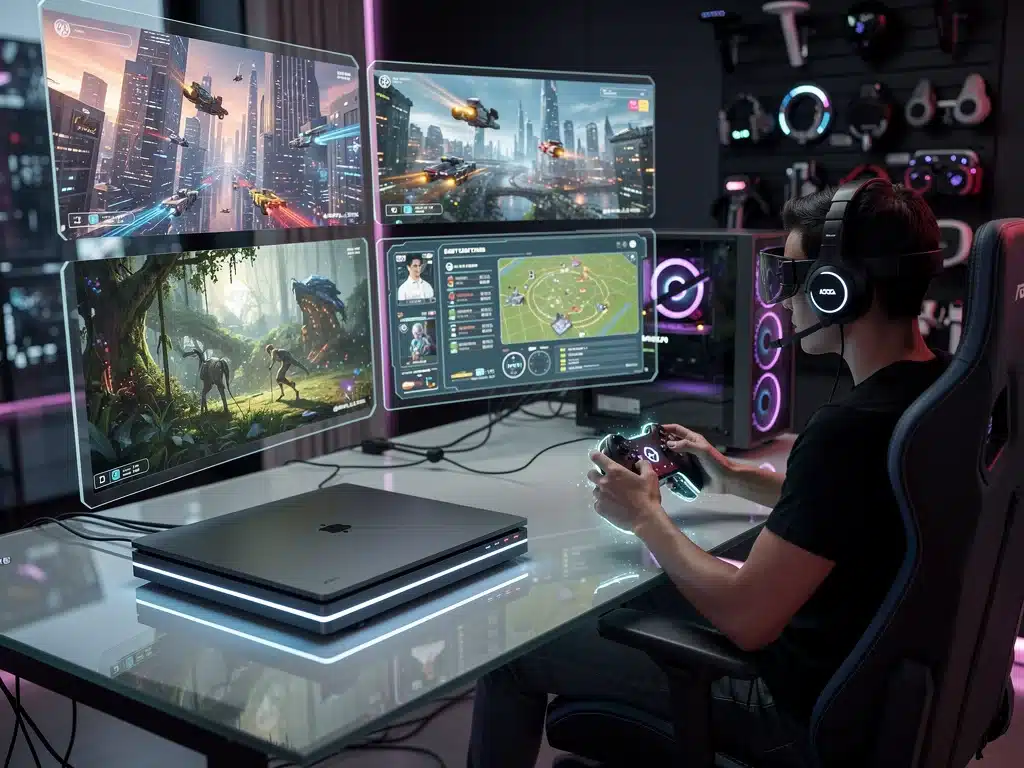
The living room entertainment ecosystem is undergoing a massive evolution, blurring the lines between cinematic reality and interactive play. Keeping a pulse on the defining Console Gaming Trends of this year reveals how cutting-edge systems are completely revolutionizing our time behind the controller.
We are witnessing a monumental leap forward as next-gen architecture, ultra-fast solid-state processing, and cloud-hybrid setups redefine baseline performance.
Simultaneously, pioneering software features like machine-learning upscaling and deeply integrated spatial audio are making virtual worlds feel staggeringly alive.
This insider breakdown cuts past the corporate hype to deliver the definitive hardware and software shifts dominating the industry right now.
Here is exactly how these massive technological breakthroughs are reshaping your gameplay mechanics and setting the new standard for interactive entertainment.
The Ascent of Cloud-Native Gaming and Subscription Models
The gaming landscape is experiencing a profound shift towards cloud-native experiences, fundamentally altering how games are accessed and played.
This trend is driven by advancements in streaming technology and robust global internet infrastructure, making high-fidelity gaming accessible without powerful local hardware.
By 2026, cloud gaming platforms are expected to significantly expand their reach, offering a seamless experience across various devices.
Alongside cloud gaming, subscription models are solidifying their position as a dominant force in content delivery. Services offering extensive libraries and day-one access to new titles provide unparalleled value, attracting a broad audience.
This model reduces the barrier to entry for many consumers, fostering a more inclusive and diverse gaming community.
The integration of cloud technology with subscription services creates a powerful ecosystem, promising consistent updates and a dynamic content pipeline. Players can anticipate a future where their gaming library is not tied to a single console, but rather accessible on demand, wherever they are.
Ubiquitous Access and Device Agnosticism
Cloud-native gaming promises a future where your game library travels with you, unconstrained by physical consoles. This flexibility allows players to pick up their progress on a smart TV, a tablet, or even a smartphone, ensuring continuity of experience.
The focus shifts from owning powerful hardware to subscribing to a service that delivers the computing power remotely. This democratizes access to high-end gaming, making it available to a wider global audience who might not invest in expensive console hardware.
- Seamless gameplay across multiple devices
- Reduced need for expensive local hardware upgrades
- Expansion of gaming into new consumer segments
The Dominance of Subscription Services
Subscription models like Xbox Game Pass and PlayStation Plus are evolving to offer even more compelling value propositions. These services are becoming central to how players discover and consume games, often including exclusive content and early access.
The financial model for publishers also benefits, providing a more predictable revenue stream and fostering longer-term engagement with their titles. This encourages continuous development and support for games within the subscription catalog.
- Cost-effective access to vast game libraries
- Inclusion of new releases on day one
- Enhanced player retention through continuous content updates
Hyper-Realistic Graphics and Ray Tracing Evolution
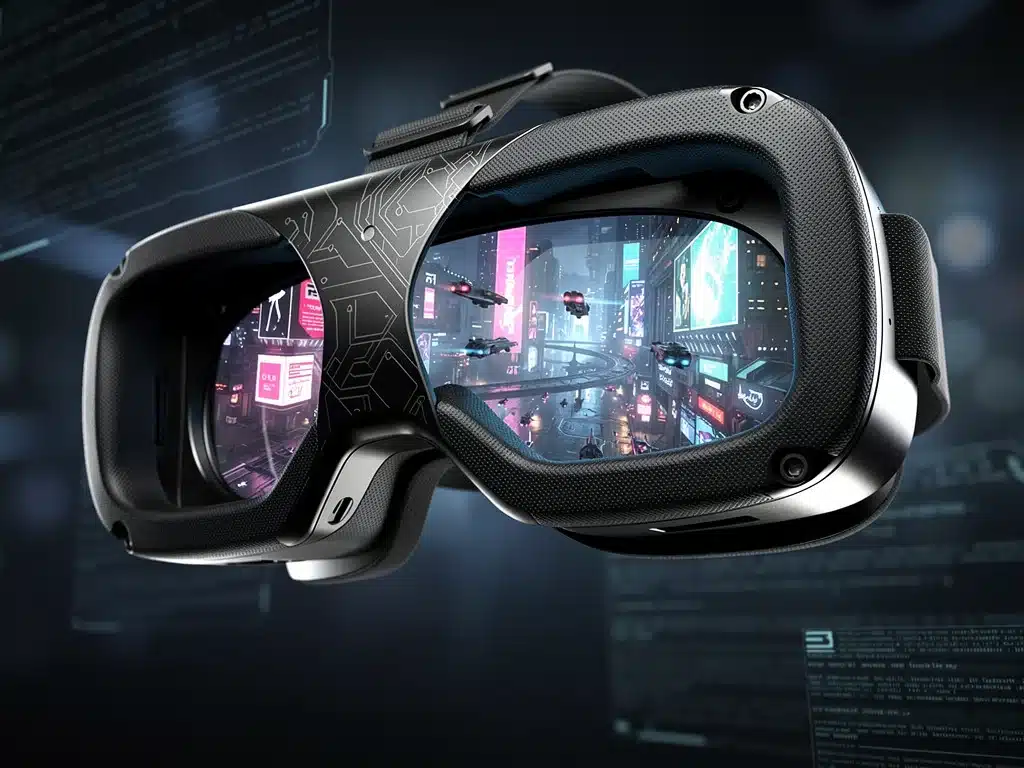
The pursuit of visual fidelity remains a cornerstone of console gaming, with hyper-realistic graphics pushing the boundaries of immersion. By 2026, advanced rendering techniques, particularly ray tracing, will be standard, making game worlds indistinguishable from reality.
This graphical leap is not merely aesthetic; it enhances gameplay through more accurate lighting and reflections.
The continuous evolution of console hardware, combined with sophisticated software algorithms, enables developers to craft incredibly detailed environments and lifelike character models.
This commitment to visual excellence creates a more believable and engaging experience for players. The integration of these graphical advancements becomes a key differentiator for next-generation titles.
Developers are leveraging these tools to create narratives and gameplay mechanics that rely on environmental realism and dynamic lighting. The subtle nuances of light and shadow, once a luxury, are now fundamental to the atmospheric quality of new console releases.
Next-Generation Rendering Techniques
Ray tracing, once a niche feature, is becoming a foundational element of console graphics, accurately simulating light behavior. This results in incredibly realistic shadows, reflections, and global illumination, transforming how game environments are perceived.
Beyond ray tracing, other rendering advancements like mesh shaders and variable rate shading optimize performance without sacrificing visual quality. These technologies enable developers to render more complex scenes with greater efficiency, pushing the graphical envelope further.
- Real-time global illumination and reflections
- Enhanced environmental realism and depth
- Optimized rendering for improved performance
The Impact on Game Design and Immersion
Hyper-realistic graphics allow for more nuanced storytelling and environmental design, where visual cues can convey mood and narrative effectively. Developers can craft worlds that feel more alive and responsive to player actions, deepening immersion.
The increased visual fidelity also supports emerging gameplay mechanics that rely on accurate representations of light and space. Puzzles, stealth sections, and exploration benefit significantly from environments that react realistically to player presence.
- Deeper narrative integration through visual storytelling
- More engaging and believable game worlds
- New gameplay possibilities based on realistic physics and lighting
The Rise of AI-Powered NPCs and Adaptive Storytelling
Artificial intelligence is set to revolutionize non-player characters (NPCs) and create more dynamic, adaptive storytelling experiences in console games by 2026.
NPCs will exhibit far more sophisticated behaviors, learning from player actions and reacting in intelligent, unpredictable ways. This moves beyond scripted responses, offering a sense of genuine interaction.
Adaptive storytelling, powered by advanced AI, will tailor narratives based on player choices and playstyles, creating truly personalized experiences.
No two playthroughs will be exactly alike, as the game world and its inhabitants evolve in response to the player’s journey. This fosters replayability and a deeper emotional connection.
This integration of AI extends to world-building, where emergent events and character relationships can develop organically. The goal is to move towards living, breathing game worlds that feel genuinely responsive and uniquely shaped by each player’s presence.
Intelligent Character Behavior
AI-powered NPCs will possess advanced decision-making capabilities, allowing them to engage in complex social interactions and tactical combat. Their responses will feel less robotic and more akin to human-like intelligence, enhancing realism.
These NPCs will remember player actions, forming opinions and relationships that influence future encounters and questlines. This creates a persistent world where player choices have tangible and lasting consequences on the game’s inhabitants.
- Dynamic NPC reactions and interactions
- Memory and evolving relationships with the player
- More challenging and unpredictable AI opponents
Personalized Narrative Evolution
Adaptive storytelling engines will dynamically adjust plot points, character arcs, and world events based on player input and previous decisions. This ensures that the narrative feels uniquely crafted for each individual’s journey.
The branching narratives will be more complex and less linear, allowing for a wider spectrum of outcomes and a greater sense of agency for the player. This personalization significantly enhances the emotional impact and replayability of titles.
- Narratives that adapt to player choices
- Increased replayability through varied story paths
- Deeper player investment in personalized game worlds

Cross-Platform Play and Unified Ecosystems
Cross-platform play is no longer a niche feature but a fundamental expectation, driving the unification of gaming ecosystems.
By 2026, seamless interaction between players on different consoles, PCs, and even mobile devices will be commonplace. This trend breaks down traditional barriers, fostering larger, more vibrant online communities.
The push for unified ecosystems extends beyond multiplayer functionality to shared progression, purchases, and social features.
Players will be able to carry their game saves and digital libraries across platforms, providing unprecedented flexibility. This consumer-centric approach prioritizes accessibility and convenience.
Major console manufacturers and publishers are increasingly embracing this model, recognizing its long-term benefits for player engagement and market expansion.
The era of platform exclusivity, while not entirely gone, is evolving to support a more interconnected gaming world.
Breaking Down Platform Barriers
Cross-play facilitates larger player pools for online multiplayer games, ensuring quicker matchmaking and more diverse competitive environments. This directly enhances the longevity and appeal of online titles for a wider audience.
Developers also benefit from a unified player base, allowing them to focus resources on creating compelling content rather than optimizing for fragmented ecosystems. This efficiency can lead to higher quality games and more frequent updates.
- Larger and more active online communities
- Improved matchmaking and competitive balance
- Streamlined development for multi-platform releases
Shared Progress and Digital Ownership
The ability to transfer game progress, unlocks, and even digital purchases across platforms is becoming a standard feature. This empowers players with true ownership over their gaming experiences, independent of their chosen hardware.
Unified account systems and cloud saves ensure that a player’s journey is consistent, whether they are playing on a PlayStation, Xbox, Nintendo, or PC. This level of convenience was once a distant dream but is rapidly becoming a reality.
- Seamless progression across all owned devices
- True digital ownership of games and content
- Enhanced convenience and flexibility for players
The Integration of Haptic Feedback and Immersive Peripherals
Haptic feedback and advanced immersive peripherals are set to redefine player interaction, moving beyond traditional controllers.
By 2026, consoles will integrate highly sophisticated haptic technologies that provide nuanced tactile sensations, enhancing immersion and responsiveness. This goes beyond simple rumble, offering detailed feedback that mimics in-game actions.
The development of new peripherals, including more refined VR headsets and specialized input devices, will further blur the lines between the player and the game world.
These innovations aim to engage multiple senses, creating a deeper and more visceral connection to the virtual environment. The goal is to make players feel truly present within the game.
This trend is about enriching the player’s sensory experience, making every action, every explosion, and every environmental detail feel more tangible. It’s a crucial step towards creating fully immersive virtual realities where players are not just observing but actively participating.
Advanced Tactile Experiences
Next-generation haptic technology will offer a spectrum of sensations, from the subtle click of a weapon to the impact of a collision. This precise feedback enhances gameplay mechanics and makes actions feel more impactful and realistic.
Beyond controllers, haptic suits and accessories are under development, promising full-body tactile immersion. While still nascent, these technologies hint at a future where players can physically feel the game world around them.
- Nuanced and realistic tactile feedback
- Enhanced physical immersion in game worlds
- New possibilities for gameplay mechanics based on touch
Evolution of Immersive Hardware
Virtual reality (VR) headsets will become more ergonomic, affordable, and deliver higher fidelity visuals, making them a more mainstream console peripheral. The focus is on reducing motion sickness and increasing comfort for extended play sessions.
Beyond VR, new input devices that track eye movement, facial expressions, and even biofeedback will emerge, offering novel ways to interact with games. These peripherals aim to capture more of the player’s intent and emotion, translating it into the game world.
- More comfortable and accessible VR experiences
- Innovative input methods for deeper interaction
- Greater sense of presence within virtual environments
| Key Trend | Brief Description |
|---|---|
| Cloud Gaming | Ubiquitous access to games via streaming, reducing reliance on local hardware. |
| Hyper-Realistic Graphics | Advanced rendering and ray tracing for unparalleled visual fidelity and immersion. |
| AI-Powered NPCs | Intelligent character behaviors and adaptive narratives for personalized experiences. |
| Cross-Platform Play | Seamless gaming across devices, fostering unified ecosystems and shared progression. |
Frequently Asked Questions About Console Gaming Trends 2026
Cloud gaming is expected to complement, rather than completely replace, traditional console sales by 2026. While it offers more accessibility, dedicated hardware will still appeal to enthusiasts seeking peak performance and exclusive titles. The market will likely see a diversification of consumer choices based on preference and budget.
Yes, ray tracing is anticipated to be a standard feature in most new console games by 2026, particularly for higher-fidelity titles. As hardware capabilities advance and optimization techniques improve, developers will increasingly leverage ray tracing to achieve hyper-realistic graphics and enhanced immersion across platforms.
AI-powered NPCs will dramatically enhance gameplay by offering more dynamic and intelligent interactions. Players can expect characters that remember their actions, adapt to their strategies, and contribute to emergent narratives. This will lead to more personalized, unpredictable, and deeply engaging game worlds, fostering greater replayability.
The biggest challenges for cross-platform play by 2026 include maintaining fair competitive balance between different input methods (e.g., controller vs. keyboard/mouse), ensuring consistent performance across varied hardware, and resolving platform-specific licensing and monetization issues. Data synchronization and anti-cheat measures also remain significant hurdles for developers.
Haptic feedback in console controllers will evolve to deliver highly nuanced and localized sensations, moving beyond simple vibrations. Expect more precise tactile responses that simulate textures, environmental effects, and specific in-game actions with greater fidelity. This will significantly enhance immersion, making interactions feel more tangible and realistic for players.
What this means
The insights into The Top 5 Console Gaming Trends highlight a period of significant evolution, not just incremental updates. These trends signify a concerted effort across the industry to deliver more immersive, accessible, and personalized gaming experiences.
Players should anticipate a future where their interactions with virtual worlds are deeper and more connected.
Developers will leverage these advancements to craft unprecedented narratives and gameplay mechanics, pushing creative boundaries.
The convergence of hardware prowess with intelligent software solutions will define the next generation of console gaming, making it a critical area to monitor for anyone following digital entertainment.
The changes are fundamental, moving beyond simple graphical improvements to redefine the very nature of play.
