The Impact of PCIe 5.0 on PC Gaming Performance: A 2026 US Technical Deep Dive
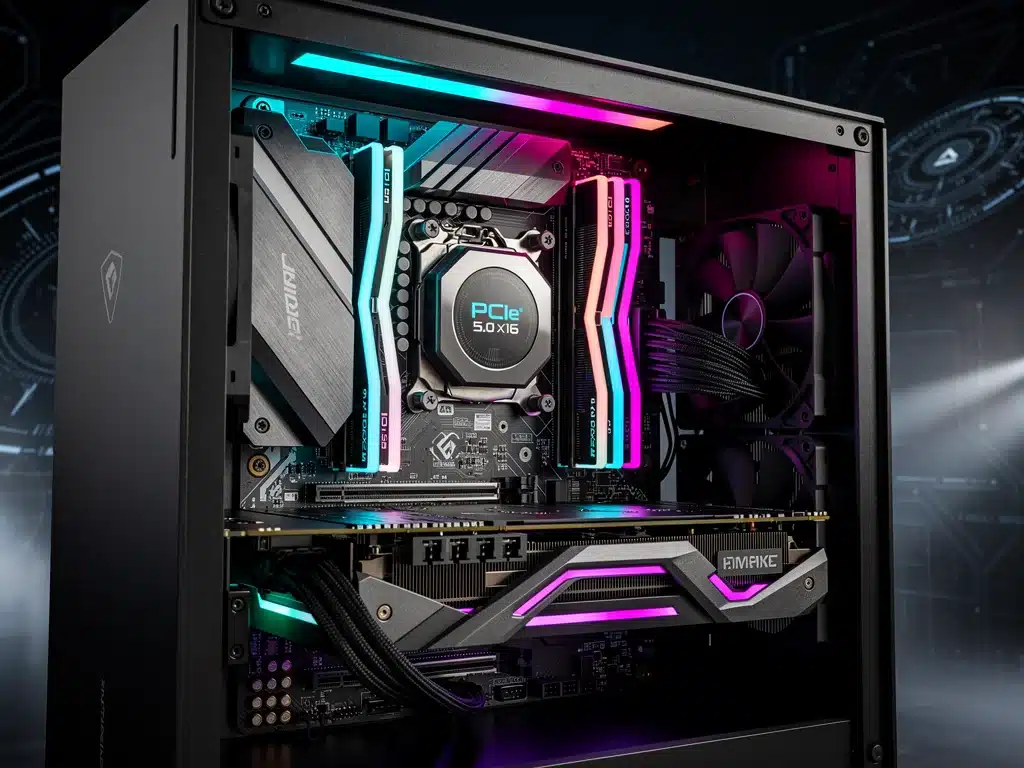
Upgrading your rig with cutting-edge PCIe technology promises unprecedented bandwidth, but does fifth-generation speed actually translate to higher frame rates?
While fifth-gen NVMe drives double system throughput, most real-world gaming workloads still bottleneck at the GPU or CPU level. Modern titles benefit more from rapid DirectStorage asset streaming and reduced load times than raw bus throughput.
Knowing whether high-speed interface lanes are worth the price tag helps you budget your next desktop build wisely. Here is a technical breakdown of fifth-generation expansion slots and their real impact on modern gaming performance.
Understanding PCIe 5.0: The Foundation of Future Gaming
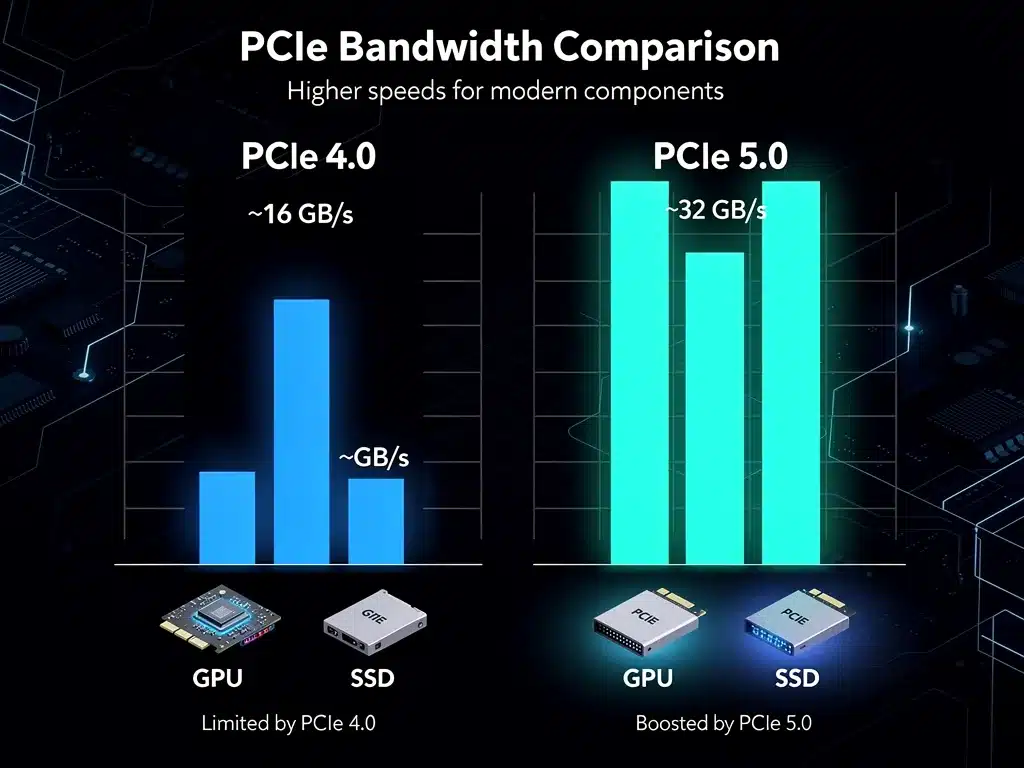
PCIe 5.0 represents a significant generational leap in interface technology, doubling the bandwidth of its predecessor, PCIe 4.0.
This advancement is not merely a numerical increase; it fundamentally alters how components communicate, setting a new standard for data throughput within a PC.
For PC gaming, this increased bandwidth translates into potential performance gains, particularly for graphics cards and storage devices.
As games become more demanding and asset-heavy, the ability to move data faster between components becomes crucial, impacting loading times and in-game fluidity.
Industry experts and hardware manufacturers have been preparing for this transition for years, with 2026 emerging as a pivotal period for its widespread adoption and the full realization of its benefits in consumer gaming systems across the US.
Bandwidth Beyond Expectations: The Core of PCIe 5.0
PCIe 5.0 offers 32 GT/s (gigatransfers per second) per lane, effectively providing up to 128 GB/s of bidirectional bandwidth on a x16 slot. This massive increase in data transfer capability directly addresses bottlenecks that have historically limited high-performance components.
The sheer volume of data that can be moved per second opens new avenues for developers to optimize game assets and streaming. It allows for more complex environments and richer textures to be loaded almost instantaneously, reducing reliance on traditional loading screens.
This technical leap is particularly relevant for the US market, where gamers often demand the latest and most powerful hardware. The early adoption of PCIe 5.0-compatible systems reflects a commitment to staying at the forefront of gaming technology.
GPU Integration and Performance Uplift
Graphics cards are the primary beneficiaries of enhanced PCIe bandwidth, as they constantly shuttle vast amounts of texture data and computational instructions. With PCIe 5.0, GPUs can access system memory and storage much faster, potentially reducing latency and improving frame delivery.
While current-generation GPUs might not fully saturate a PCIe 5.0 x16 slot, future iterations, expected by 2026, are designed with this increased bandwidth in mind. This foresight ensures that the infrastructure is in place for tomorrow’s graphical powerhouses.
- Reduced Latency: Faster data paths between GPU and CPU/RAM minimize delays.
- Enhanced Asset Streaming: Games can stream higher-resolution textures and models more efficiently.
- Future-Proofing: Provides ample bandwidth for next-generation graphics processing units.
The SSD Revolution: DirectStorage and Beyond
Perhaps one of the most transformative aspects of The Impact of PCIe 5.0 on PC Gaming Performance lies in its synergy with NVMe SSDs, especially concerning Microsoft’s DirectStorage API.
This technology allows the GPU to directly access game assets from the SSD, bypassing the CPU, which drastically reduces loading times and improves resource utilization.
PCIe 5.0 NVMe SSDs boast sequential read speeds upwards of 10-14 GB/s, a monumental leap from PCIe 4.0 drives. This speed is critical for DirectStorage to function optimally, ensuring that the GPU has a constant, high-speed supply of data for rendering complex game worlds.
By 2026, the widespread adoption of PCIe 5.0 SSDs will make instantaneous loading screens a common reality in high-end PC gaming. This shift will fundamentally change how games are designed and experienced, moving away from conventional loading metaphors.
DirectStorage and Game Development
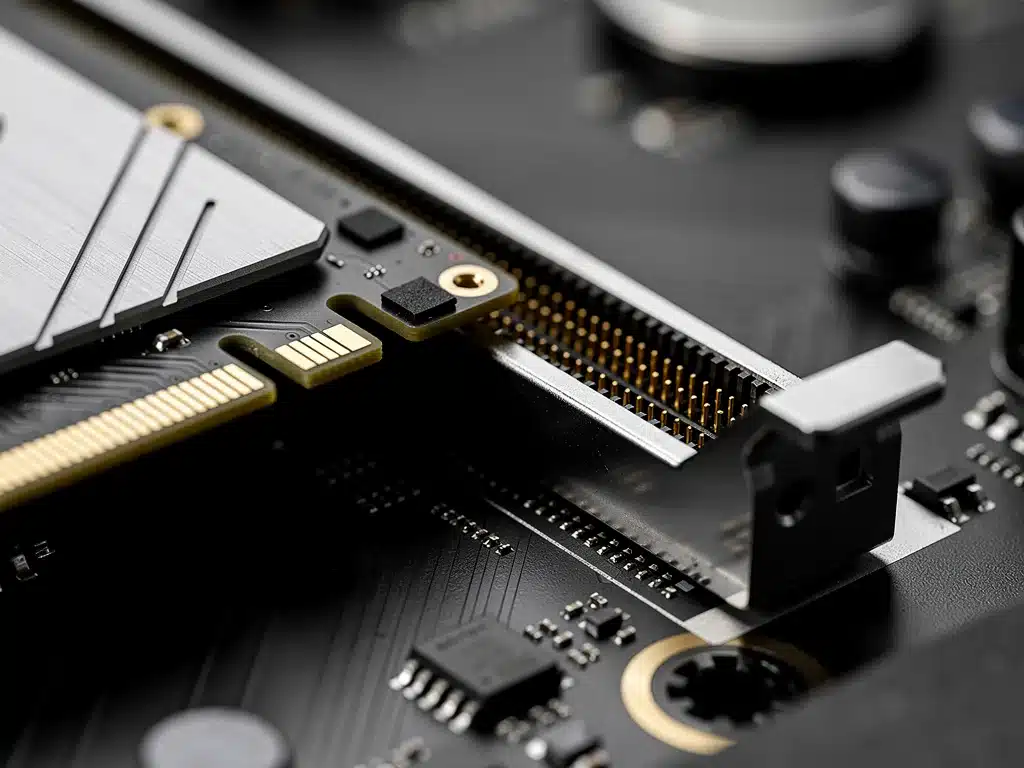
DirectStorage, initially introduced with Xbox Series X/S, is becoming increasingly prevalent in PC titles. Its effectiveness is directly tied to the speed of the underlying storage, making PCIe 5.0 SSDs a crucial component for maximizing its benefits.
Game developers are now designing titles with DirectStorage in mind, leveraging the capabilities of PCIe 5.0 to create more immersive and seamless gaming experiences. This includes vast open worlds that load assets on the fly without noticeable hitches.
- Instantaneous Loading: Eliminates traditional loading screens, enhancing player immersion.
- CPU Offloading: Frees up CPU cycles by allowing the GPU to access storage directly.
- Optimized Asset Streaming: Enables games to stream highly detailed textures and models in real-time.
Motherboard and CPU Ecosystem: The Enabling Hardware
The full realization of The Impact of PCIe 5.0 on PC Gaming Performance requires a compatible motherboard and CPU. Modern chipsets from Intel (e.g., Z790, Z890) and AMD (e.g., X670, B650, X870) already support PCIe 5.0, providing the necessary lanes for high-speed GPUs and SSDs.
These platforms integrate advanced power delivery and cooling solutions to handle the increased demands of PCIe 5.0 components. The ecosystem is evolving rapidly, with more affordable options becoming available to a broader range of consumers by 2026.
The synergy between CPU, motherboard, GPU, and SSD is critical. A robust motherboard ensures stable power and data flow, while a capable CPU manages the overall system, allowing PCIe 5.0 devices to operate at their peak efficiency.
Cooling Challenges and Power Requirements
The increased performance of PCIe 5.0 components comes with higher power consumption and heat generation. PCIe 5.0 NVMe SSDs, in particular, can run significantly hotter than their PCIe 4.0 counterparts, necessitating robust cooling solutions.
Many high-end motherboards now include integrated heatsinks for M.2 SSDs, and aftermarket cooling solutions are becoming more prevalent. Proper thermal management is essential to prevent thermal throttling, which can negate the performance benefits of PCIe 5.0.
Graphics cards designed for PCIe 5.0 will also likely feature more advanced cooling systems and potentially higher power draw, requiring more robust power supply units.
Consumers must consider these factors when upgrading or building new systems to harness the full impact of PCIe 5.0 on PC gaming performance.
Real-World Gaming Scenarios: Benchmarks and Expectations
While the theoretical bandwidth gains of PCIe 5.0 are impressive, real-world gaming benchmarks often show more nuanced results.
For many current games, the performance difference between PCIe 4.0 and PCIe 5.0 in terms of frames per second (FPS) is marginal, especially at higher resolutions.
However, the significant improvements are observed in loading times and asset streaming, particularly in titles optimized for DirectStorage. Games with large, complex open worlds or those that frequently load new areas benefit immensely from the increased SSD speeds.
By 2026, as more games are developed to fully exploit PCIe 5.0 and DirectStorage, the performance gap will widen. This means smoother gameplay, faster transitions, and a more immersive experience, making the upgrade increasingly compelling for serious gamers.
The 2026 Landscape: Widespread Adoption and Accessibility
By 2026, PCIe 5.0 is expected to be a standard feature across most mid-to-high-end PC builds in the US. The initial premium associated with early adoption will likely diminish as manufacturing processes mature and competition increases.
This widespread accessibility means that more gamers will be able to experience the benefits of faster loading times and improved asset streaming without breaking the bank. The transition will be less about revolutionary FPS gains and more about a refined, more responsive gaming experience.
The industry is moving towards a future where the seamless flow of data is paramount, and PCIe 5.0 is the critical enabler of this vision. Its Impact of PCIe 5.0 on PC Gaming Performance will be felt across the entire gaming ecosystem.
Challenges and Future Outlook for PCIe 5.0
Despite its advantages, PCIe 5.0 faces challenges, including the need for compatible hardware across the entire system and the current lack of widespread software optimization.
Not all games or applications are designed to fully utilize the available bandwidth, meaning some benefits remain theoretical for now.
However, the trend is clear: as game engines evolve and developers continue to push graphical fidelity, the demand for higher bandwidth will only grow. PCIe 5.0 provides the necessary headroom for this evolution, future-proofing gaming systems for years to come.
The ongoing development of PCIe 6.0 and beyond also signifies a continuous drive for even faster interfaces. While PCIe 5.0 is the focus for 2026, the industry is already looking ahead, promising even more exhilarating advancements in PC gaming performance.
| Key Point | Brief Description |
|---|---|
| Bandwidth Doubling | PCIe 5.0 offers 128 GB/s bidirectional bandwidth on x16, crucial for high-speed data transfer. |
| SSD & DirectStorage | Enables ultra-fast loading and direct GPU access to assets, transforming game experiences. |
| GPU Evolution | Future GPUs will fully leverage PCIe 5.0 for reduced latency and improved asset streaming. |
| 2026 Adoption | Expected widespread integration in mid-to-high-end gaming PCs, enhancing overall responsiveness. |
Frequently Asked Questions About PCIe 5.0 in Gaming
The primary benefit is significantly increased bandwidth, enabling faster data transfer between the CPU, GPU, and SSD. This leads to quicker game loading times, more efficient asset streaming, and reduced latency, especially with technologies like DirectStorage.
For most current games, the direct FPS boost from PCIe 5.0 is marginal. The main improvements are in loading speeds and asset streaming. Future games, optimized for PCIe 5.0 and DirectStorage, are expected to show more noticeable performance gains.
Yes, to fully utilize PCIe 5.0, you will need a compatible CPU and motherboard that support the standard. Modern platforms from Intel (e.g., Z790/Z890) and AMD (e.g., X670/X870) already offer PCIe 5.0 lanes for graphics cards and NVMe SSDs.
PCIe 5.0 allows NVMe SSDs to reach sequential read speeds of 10-14 GB/s, drastically reducing game loading screens. This speed is essential for Microsoft’s DirectStorage API, enabling GPUs to access game assets directly and more efficiently.
PCIe 5.0 components, especially NVMe SSDs, generate more heat due to higher performance. Adequate cooling, often via integrated motherboard heatsinks or aftermarket solutions, is crucial to prevent thermal throttling and ensure optimal performance.
Looking Ahead: The Evolving Gaming Landscape
The Impact of PCIe 5.0 on PC Gaming Performance marks a significant inflection point for the industry.
It underlines a shift towards more seamless, responsive, and graphically rich gaming experiences. As hardware becomes more affordable and software optimization catches up, the benefits will extend to a broader audience.
Gamers in the US should monitor developments in GPU and SSD technology, as well as new game releases that explicitly leverage DirectStorage and PCIe 5.0.
These advancements are not just about raw power but about fundamentally changing how we interact with digital worlds, making them more immersive and fluid.
This ongoing evolution promises a future where technical limitations fade further into the background, allowing developers to unleash their creative visions without compromise and delivering unparalleled gaming experiences.
